Showing posts sorted by relevance for query puente hills. Sort by date Show all posts

June 12, 2009

California's showdown over waste feedstocks


A showdown is looming in the California State Senate this summer over an issue that is at the heart of the nationwide drive to develop and deploy bioenergy conversion technologies.

In a state that prides itself on its landmark achievements in outlining Global Warming Solutions (AB 32), Bioenergy Action plans, and Low Carbon Fuel Standards, access to some of the most sustainable feedstocks for conversion to bioenergy is currently blocked by inexact statutory language and permitting regulations. As a result, municipalities and utilities are frustrated in their ability to exercise local authority over how they meet stringent waste diversion goals to reduce reliance on landfills for dumping post-recycled waste.

Post-recycled municipal solid waste is considered to be the most sustainable feedstock for biomass conversion into biofuels and biopower because, unconverted, this waste emits greenhouse gases while it decomposes. It is the only feedstock that has "negative" cost - receiving facilities receive per ton "tipping fees" that vary from region to region. Socially, it could provide good urban jobs that cannot be off-shored.

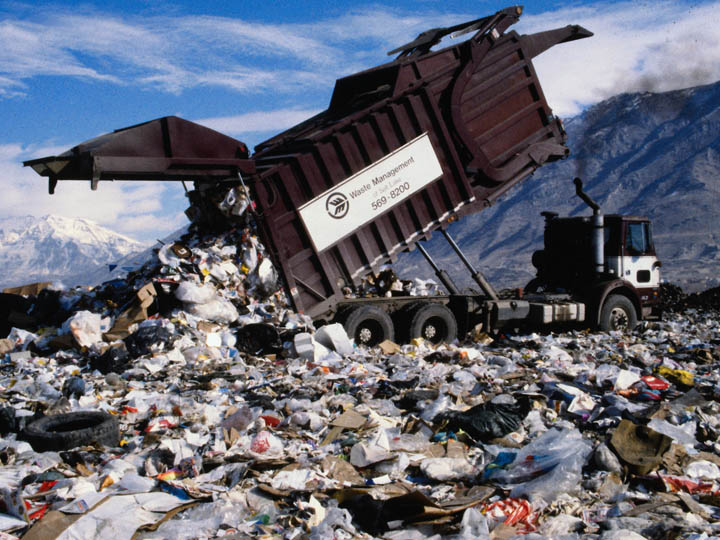
At the rate that municipal landfills are filling up and closing down, there is no time to wait. The state's largest landfill in Puente Hills, which services Los Angeles County, is scheduled to close in 2013. MSW currently disposed of there will instead be sent by train to a landfill 200 miles away!

Legendary former California State Senator (President Pro Tem) David Roberti and his Bioenergy Producers Association (BPA) is working overtime this month lining up support for passage of the bipartisan California Assembly Bill 222. With over 60 organizations supporting it (including municipalities, utilities, labor organizations, waste disposal facilities, and others) the bill was unanimously approved by the Assembly Utilities and Commerce Committee on April 27, 2009, and passed the State Assembly by a vote o 54-13 on Monday, June 1st. The Senate is expected to be a much more challenging battleground where, without support, the act might not get out of committee.

AB 222 proposes to update the Integrated Waste Management Act of 1989. It is one of those seemingly innocuous pieces of legislation that only a policy wonk could love, but it is extremely important because without its passage municipalities will continue to find it virtually impossible to permit and fund deployment of municipal solid waste conversion technologies around the state. In a Catch-22 they are penalized for not deploying solutions that achieve minimum state diversion targets..

If passed, deployment of such facilities could divert approximately 30 million tons of post-recyclables from landfills while producing biopower and biofuels in accord with state (AB 32) and national initiatives (EISA, the Farm Bill, and pending Waxman/Markey cap and trade bill) to reduce greenhouse gas emissions.

The strongest opposition to the legislation is being coordinated by Californians Against Waste (CAW). They see the bill as a threat to their sizable influence over waste streams in California. The BPA acknowledges the contributions that CAW has made to reducing, reusing, and recycling MSW in the state but dispute the contention that this measure will set recycling back. Instead, they emphatically assert it will help expand recycling in the state.

To point out other discrepancies, BPA is currently distributing a document titled CAW Misrepresents Renewable Energy Bill (AB 222) throughout Sacramento itemizing CAW's objections ("myths") and countering them with the facts at the foundation of AB 222 as written. The document charges that "Californians Against Waste has repeatedly attempted to discredit or thwart legislative and regulatory initiatives that would make possible the production of advanced biofuels and green power from these resources."

At a common sense level, if society can't even agree that post-recyclables are qualified feedstock for conversion to alternative forms of energy then the likelihood of other feedstocks being qualified is virtually nil. It is time for legislators to put more authority back in the hands of municipal governments to meet their diversion goals and to determine what is and what is not safe and sustainable. Public and private industries will always have to meet stringent standards on emissions and pollution for any solutions they deploy.

----------------
technorati , , , , , , ,

July 31, 2007

Navigating to Zero Waste in California

The non-profit California Resource Recovery Association (CRRA) recently held its 31st annual CRRA Conference and Trade Show in the coastal city of San Pedro in Los Angeles County attracting recycling professionals from throughout the state. The theme of this year's event was "Navigating to Zero Waste." As a global leader in the environmental sustainability field...
The CRRA works to expand markets for recycled materials, promotes sustainable materials policies and is a clearinghouse for information, innovation, and industry and governmental initiatives. CRRA newsletters, workshops and conferences provide up-to-the-minute information on issues that shape the recycling and composting fields.

Responding to the goals of California's landmark Integrated Waste Management Act (AB 939) of 1989 the CRRA is to be credited for helping communities throughout the state divert over 54% of its urban waste from landfills through recycling. What goes unrecorded is the amount of waste that never makes it to the municipal recovery facilities (MRFs) through many of the coordinated programs it has helped to foster and implement to significantly reduce the source of waste. This is achieved by identifying major sources of waste production and helping the producers recognize their responsibility to streamline wasteful and waste producing practices.

Unfortunately, "Navigating to Zero Waste" will never be reached simply through application of the 3 R's (Reduce, Reuse, and Recycle) using existing technologies at the rate at which waste grows in the state. Even if 60% of waste is diverted, the same principal volume is likely to remain. This threatens urban landfills like L.A.'s vast Puente Hills landfill (which will close in 2013) and a San Diego landfill (which will close in 2012) and other close proximity urban repositories. The remaining refuse will then be shipped at great expense and fuel usage to outlaying landfills as far as 200 miles away.

So it was heartening to see that two of the plenary speakers were Councilmember Greig Smith and California Integrated Waste Management Board (CIWMB) member Rosalie Mulé.

Greig is a refreshing example of a local politician who responds to the voting public by listening to their concerns, enlisting professionals to create a solution, and making sure that the solution gets significant political support that will outlive the terms of the signatories. L.A.'s 20-year RENEW LA plan obligates the Los Angeles Bureau of Sanitation to divert unrecycled trash to biorefineries located at MRFs thereby reducing waste volume by 85% while co-generating electricity and very possibly producing biofuels (biooils and ethanol). He reported that selection of the exact technology to be implemented at the first site will be made later this summer.

Rosalie Mulé was appointed to the CIWMB by Governor Arnold Schwarzenegger because of her experience working in the private sector waste industry. She reiterated the Board's commitment to advancing programs that minimize waste, manage landfills, promote producer responsibility, and maximize waste usage. She applauded the efforts of organizations such as CRRA to make California a leader in the world for how to create and implement recycling programs. During her speech she stated:
We also want to encourage innovations and technologies that will provide for the most efficient and effective management and reuse of material. There are a lot of new technologies on the horizon, some of them are proven and some of them are not but I like to compare them to space exploration. We would not have the things we have today had we not gone out there and conducted the research and done the exploration and navigated the uncharted waters.

It is time to move beyond the current established methods of waste reuse to develop new waste conversion alternatives. Many of these practices are being employed successfully in Europe and Japan where population density mandates technological solutions that place waste conversion facilities within close proximity to populated areas. We have the luxury of space but new popular standards, like AB32 the Global Warming Solutions Act, require renewed industry action on a timely basis.

technorati , , , , , , ,

November 2, 2007

Capturing energy from unrecycleable waste

Implementing new technologies to solve chronic problems is hard work. A generation filled with expectations of instant gratification is sure to be frustrated by the seemingly slow pace of change to correct obvious environmental challenges.

Take recycling for example. In the last twenty years we have made great strides to reduce, reuse and recycle trash from our waste streams as we hover around 50% diversion from landfills throughout major portions of California. And yet, with the simultaneous growth of volume of trash, we seem unable to reduce beyond that threshold.

Beginning in 2004 the County of Los Angeles engaged in a program to take a major leap forward in reducing the accumulation of seemingly unrecycleable waste that ends up going from county material recovery facilities (MRFs) to landfills. Their vision is to deploy emerging conversion technologies at the MRF that can cleanly reduce trash volume by as much as 85% without emitting toxins or greenhouse gases into the atmosphere. As a substantial bonus, renewable bioenergy could be captured through the generation of green electricity and/or biofuels - depending on which specific technology is chosen.

A team of seasoned experts have just issued an evaluation report of their progress to date. Titled the Los Angeles County Conversion Technology Evaluation Report: Phase II - Assessment it details the thorough screening and evaluation of technologies from throughout the world - Israel, Japan, Europe, and the United States - that are competing for deployment at one of the county's best suited MRFs.

In recognition of the public's interest in the program's operations and environmental sustainability, public outreach programs and state regulatory reform efforts are already underway. A decision on the final site and technology to be funded will be made in early 2008. In view of the environmental costs of doing nothing and the painstaking efforts the Department of Public Works and allied agencies are making to deploy a solution that is in the best interest of all stakeholders, the decision by the parties involved in this effort is certain to be one that deserves public support.

Below is the latest (October 31, 2007) press release on the report.

------------------------------
COUNTY OF LOS ANGELES RELEASES FINDINGS ON NEW ALTERNATIVES TO LANDFILLS
County report finds viable conversion technologies to tackle Southern California's looming trash problem

Los Angeles - 36,000 tons per day! That's how much trash is deposited into landfills on a daily basis from Los Angeles County. Within a few short years, many of those landfills will be reaching capacity. This includes the Puente Hills Landfill, currently the largest operating landfill in the United States, which will close in 2013. That leaves Los Angeles with one very large problem.

After years of exhaustive research and evaluation of conversion technology facilities from around the world, the County of Los Angeles has announced the official release of a report summarizing its findings and outlining the next steps in its conversion technology program. In the next year, the County will select one or more projects to be among the first commercial-scale demonstration facilities in the United States, laying the groundwork for a fundamental shift in how the region deals with its garbage.

"Los Angeles County is promoting cutting edge technologies that have been proven effective in Japan, Israel and Europe. Trash doesn't have to be a problem, it can be a resource for clean energy and other marketable products," stated Paul Alva, chair of the County's Alternative Technology Advisory Subcommittee.

Conversion technologies encompass a variety of advanced processes that convert normal household trash into renewable energy, biofuels and useful products. These technologies provide an alternative to landfills by offering a clean and safe way to turn residual trash (which cannot be recycled economically) into a valuable resource.

"Through first hand evaluations of operational facilities in Europe, Israel, and Japan, we have found that conversion technologies are viable and environmentally friendly means of managing our solid waste," said Alva. "These technologies offer real solutions to California's waste and energy crises."

The report identifies four viable technologies that are capable of managing Southern California's residual waste in a cost-effective and environmentally sound manner. In addition, the report identifies four recycling facilities where a conversion technology facility could be co-located. The County will request that these "short-listed" technology developers and recycling facilities form partnerships and submit formal proposals to be among the first commercial-scale conversion technology demonstration facilities in the United States. Early next year, a competitive bid process will determine which project will receive the County's support. A final decision will be announced by mid-2008.

The technology finalists are: Arrow Ecology (anaerobic digestion); International Environmental Solutions (pyrolysis); Interstate Waste Technologies (gasification); and Ntech Environmental (gasification). The site finalists are: Del Norte Regional Recycling and Transfer Station (Oxnard); Perris MRF/Transfer Station (Perris); Rainbow Disposal (Huntington Beach); and Robert A. Nelson Transfer Station and MRF (Rubidoux).

In conjunction with the report's release, the County has launched a new and improved conversion technology Web site. The www.SoCalConversion.org.

The mission of the Southern California Conversion Technology Demonstration Project is to evaluate and promote the most promising conversion technologies from around the globe, and work with communities throughout the region to develop demonstration facilities that showcase the technical, economic and environmental viability and benefits of conversion technologies.

----------------
technorati , , , , , , , ,

August 2, 2010

More Garbage from the CA Senate SEQ


The Puente Hills Landfill is the largest operating sanitary landfill in the United States (and probably the world). It is scheduled to close in 2013.

Now that AB 222 has finally "passed" through the Senate Environmental Quality Committee (SEQ), the question is, does the legislation meet the vision of what has passed through the full Assembly (54-13) and the Senate Utilities Committee (6-1) last year? The answer is a resounding "NO!"

The Senators on the SEQ bowed to the traditional recycling industry lobby and gutted the bill to the point that its authors are loathe to recommend it because it will virtually kill investment in any conversion project in the state. This despite the fact that AB 222 was endorsed by more than 100 credible organizations statewide, including the California Energy Commission, the Air Resources Board and CalRecycle.

This outcome means more overflowing of current landfills and more local municipalities (including the very environmentally astute Los Angeles County Department of Sanitation/Integrated Waste Management Task Force) with their hands tied as they try to improve systems and reduce the amount of money spent diverting over 40 million tons/year of municipal solid waste from landfills. It also means that hundreds of millions in Federal grants to deploy these projects are going to other states, even though the developers and major investors live and work in California.

Here is a snapshot of the current state of AB 222 by its lead promoter, Jim Stewart, Chairman of the Bioenergy Producers Association.

--------------------------
The Senate Environmental Quality Committee Deals a Major Blow to Renewable Energy in California
by Jim Stewart, Chairman of the Board, Bioenergy Producers Association


The world’s organic waste streams represent one of its most promising and immediately available sources of renewable energy. The United States annually generates more than 1.5 billion tons of organic waste. From this single resource this nation could produce enough advanced biofuels to eliminate its need to import petroleum.

Just from the nearly 40 million tons of post-recycled waste that California places in landfills each year, a wide range of 21st Century, non-incineration, non-combustion conversion technologies could sustainably and cleanly produce 1.6 billion gallons of ethanol and 1250 MW of power.

These technologies herald a new era in recycling—the recovery of energy from waste and the recycling of carbon. During the past year, the Department of Energy has provided $600 million in direct grants to support a total of $1.3 billion in biorefinery construction.

The California Air Resources Board has called for the construction of 24 conversion technology plants by 2020 in order to achieve the goals of AB 32 and the Low Carbon Fuel Standard. Ethanol for organic waste is perhaps the only pathway can absolutely can meet the ARB’s goals for greenhouse gas reduction from automobiles under the LCFS.

However, current statute contains scientifically inaccurate definitions and repressive permitting pathways (more rigorous than those required to site a major solid waste landfill) that are driving biobased technology producers and investment capital away from California.

AB 222, as passed by the Assembly and approved by the Senate Utility, Energy and Communications Committee, was designed to address these issues. It would have provided a clear and achievable permitting pathway for biorefinery projects. AB 222 would have qualified the waste feedstocks processed by these facilities as landfill reduction (rather than as disposal) and would have enabled the electricity produced from the biogenic portion of solid waste to count as renewable under the state’s Renewable Portfolio Standard (as does landfill gas).

The bill was consistent with the Waxman/Markey bill, which would qualify the biogenic portion of municipal solid waste as a feedstock for renewable electricity production under the federal RPS. It was similarly consistent with the EPA’s Renewable Fuel Standard (RFS2), which enabled MSW as a feedstock for advanced biofuels production.

However, in late June, the five Democrats on the Senate Environmental Quality Committee, yielding to opposition orchestrated by lobbyists for the traditional recycling industry, stripped AB 222 of its key elements, including the RPS and landfill reduction credits. This despite the fact that AB 222, in the form that passed the Assembly, was endorsed by more than 100 credible organizations statewide, including the California Energy Commission, the Air Resources Board and CalRecycle. Further, it was approved on bi-partisan votes of the Committees that oversee energy issues in both the Assembly (11-0) and Senate (6-1), and by the Assembly itself (54-13).

And now, the Environmental Quality Committee has further amended the bill to create even more restrictive pathways for the implementation of conversion technologies in the state. These amendments place all conversion technologies, both high and low temperature, in “transformation”, a category that equates them with incineration, permanently classifying them as disposal and leaving them subject to the Countywide Siting Element. This statutory provision requires that a project proponent obtain the approval of a majority of city councils representing a majority of the population in a County before he can commence the CEQA process. In Los Angeles County, this would require a project proponent to obtain the approval of a minimum of 45 city councils.

Under current statute, even if the permitting process were successful, it would be at least four years before a solid waste-to-biofuels/green power facility could even begin construction in California. During that time, the state will landfill 240 million tons of post-recycled solid waste.

In 2010, as a nation, we have experienced a massive oil spill in the Gulf--perhaps the most devastating environmental disaster in the nation’s history—we are engaged in two wars in the Middle East, and as a nation we are paying $250 billion annually to import petroleum, a meaningful portion of which is finding its way to organizations whose goals are to destroy this nation’s value system, its economy and its way of life.

300 thermal conversion technologies are operating throughout the world and are meeting all environmental standards of their jurisdictions, and in Europe, these standards are often higher than those of California. All of these facilities create one and the same product—synthesis gas, which can be used to produce pipeline quality natural gas, power, chemicals and other products. More than 100 of these facilities--in Europe, Japan, China and elsewhere--are treating municipal solid waste in the process of producing electricity.
And now, these technologies are being introduced across North America to produce biofuels. They are a key element in enabling this nation to meet its mandate for the production of 21 billion gallons of advanced non-food derived biofuels by 2022.

For these reasons, one would expect the California legislature, particularly its Environmental Committees, to support major initiatives that could assist in reducing the nation’s dependence on fossil fuels.

However, for more than five years, the environmental committees of the California legislature have blocked legislation that would enable the permitting and construction of clean 21st century technologies that could contribute to national security, energy independence, jobs and a better environment for California.
---------------

For further information, contact:
James L. Stewart, Chairman, BioEnergy Producers Association
323-650-5096 jls.sep@gmail.com

technorati , , , , , , , , ,

March 12, 2010

Working together for MSW energy recovery

SCWMF meeting attendees (left to right): Dr. Kay Martin, Chip Clements, Coby Skye, Rick Brandes, Tobie Mitchell, and Jim Stewart (11/2009 by Scott Miller)

Last November the Southern California Waste Management Forum (SCWMF) met at its 38th annual meeting to discuss future directions for municipal solid waste management in the region. 2010 is an important year because time is running out before the 2013 closure of Southern California's largest landfill (Puente Hills). This is also the year that AB 222 will be reviewed by the Environmental Quality Committee before proceeding onto the California Senate floor for a vote. Without passage of AB 222 local municipalities will have fewer options for deploying regional solutions to the state's strict recycling and landfill diversion mandates.

Speaking eloquently on this occasion about the dichotomy of competing camps and the need for collaborative and regional decision-making was William ("Rick") Brandes from the U.S. EPA in Washington, DC. Rick has recently retired from his position as Chief of the Energy Recovery and Waste Disposal Branch, Office of Resource Conservation and Recovery.

His presentation was titled "EPA and Energy Recovery from Wastes." He talked about the polarized stances that have formed over the energy recovery issue and the need for the two camps to come together. He pointed out that increasing climate change concerns have forced analysis of comprehensive mitigation strategies for which energy recovery is evolving as a major player. "Increased recycling and energy recovery provide significant greenhouse gas emissions savings," he asserted.

He pointed out that in Europe population density and lack of open land has convinced policymakers of the need to enable utilities to deploy energy recovery and centralized heating and power (CHP) systems. The emphasis there is on substituting waste-to-energy facilities for landfills. These facilities are situated within the communities they serve without toxic impacts on surrounding populations. In fact, as his graphic shows below, the countries with the most comprehensive recycling programs are also the ones that use incineration the most.

This logic seems to be an affront to some recycling and "zero waste" proponents who argue against energy recovery using thermochemical means no matter what the emissions profile is.

In this month's MSW Management magazine, Rick Brandes admonishes those who refuse to recognize that solutions are regional and require cooperative effort to achieve. Below are some excerpts from this article.

--------------------------------
March-April 2010
Cooperation, Not Conflict: Municipal Solid Waste Management in the 21st Century

By Rick Brandes

Having recently retired after 31 years working on waste management regulations and policy at the US Environmental Protection Agency, I’d like to voice a massive frustration on the state of municipal solid waste management policy in this country.

In one camp are the “zero wasters.” They see a world where real integrated materials management means all materials are contained in a continuous use/reuse cycle: organics to composting and soil enhancement, recyclables returned to use either in closed or open loop recycling systems, metals and glass back to new metals and new glass, and paper back into paper. They see the public as ready for a massive change to a more sustainable lifestyle, trashwise. And, incineration is viewed as the enemy of zero waste, not a complement.

In the other camp are the “energy recoverers.” They see a practical, realistic world, where real integrated materials management is driven by market forces, where recycling occurs when it makes market sense and energy is recovered from the bulk of the remainder of the non-recyclable municipal wastestream through mass-burn incineration or advanced thermochemical conversion. They see it as a decision on whether to landfill or recover energy, not whether to incinerate or recycle. They see the public as most likely to do what they are currently doing—and that doesn’t include a big change in lifestyle, trashwise.

It’s not like there are no alternative strategies. There are many, many ways to beneficially use this trash mountain of ours. Augment soil. Generate power. Make paper and save trees. Reduce bauxite mining. Recover even more metal out of the ash. Make park benches and roads. Produce ethanol and biodiesel. Use all alternatives where they make sense. Use different waste management strategies in different places. Do more of some of these things in some places and less of them in other places. But don’t editorially gun people down when they don’t do what you think they should do. Give communities the best available information, and they will probably do what is best for them. Let them make their trash more valuable.

About the only thing we can say right now is that there exists a massive lack of consensus on what constitutes an effective integrated materials management strategy. That has to change.

For the complete article, click here

I will be speaking about this and sustainable supplies of rural biomass during the Opening Session of the Waste-to-Fuels Conference in Jacksonville, FL April 18-20.

----------------

technorati , , , , , , , ,

January 26, 2007

Expanded Recycling - a Key to Cutting Fossil Fuels and Global Warming

What is "expanded recycling?"

To governmental agencies and utilities "expanded recycling" means changing regulations so we can move more trash from the black bin into the blue bin... or making more pre-sorted pickups available from multi-family dwellings (apartment buildings and condos). Some (Californian's Against Wastes and other environmental groups) see it as reducing the source of waste - reducing packaging while manufacturing products out of more biodegradable and recyclable materials. To them it also means holding manufacturers accountable for recovering their spent products and reusing their components. Certainly "expanded recycling" is all of these.

But to a growing legion of waste management professionals expanded recycling can also be achieved through biomass conversion technologies (CTs). According to their preferred waste management hierarchy, after the source of waste has been reduced and reused, and as much of the trash has been recycled and composted as possible, the bulk of the residual should be recycled molecularly using clean conversion technologies.

How big is this mountain of residuals? In spite of our best efforts at recycling, it is as big as it was when recycling started back decades ago - roughly 40 million tons per year in California. Why?... because of population growth and expanded consumption of packaged goods. Since most of these goods are imports, reducing or redesigning the source of waste is an unreal expectation without draconian change in consumer behavior and trade regulations.

Isn't halting growth good enough? No - because the only "ultimate" solution now is landfills and they are filling up fast. Los Angeles Co. Department of Sanitations' gargantuan landfill in Puente Hills (13,200 tons per day or approximately 65% of their responsibility) will run out of room within seven years. Their backup site is 200 miles away. That means using a new expensive "waste-by-rail" train system to ship the residuals to the desert. That will require the equivalent of a 3-mile long train each day!

So time is running out. Currently under evaluation for deployment of a new CT facility by the Los Angeles Department of Public Works are a number of suppliers - one supplier using anaerobic digestion, two using waste-to-fuel technology, and six using thermal technology. Using various clean biological and thermal processes they seek to recycle as much as 85% of the residual waste volume by converting it into its molecular components and reforming them into synthesis gas, sugars and oils, low sulfer diesel, and "green" chemicals.

The synthesis gas (primarily CO and H2) could be combusted - but a cleaner more cost-effective alternative would be to ferment it into ethanol or reap the hydrogen - the cleaner air renewable fuel alternatives for ending gasoline dependence. The thermal technologies would also provide a clean alternative source of steam for co-generating electricity.

What relevance is "expanded recycling" to global warming and California's AB32? Landfills reek methane (21 times more toxic than C02 as a greenhouse gas) and although modern landfills capture much of this gas, they have been identified as one of the principal targets of the carbon cap legislation. Other major targets are electrical power plants, oil refineries, and utilities. By using conversion technologies, positive emissions impacts can be made on all of these - fewer fossil fuel burning power plants; less dependence on high-polluting oil and oil refining process; more reliance on cleaner fuel vehicles and hybrids; fewer landfills and cleaner wastewater and solid waste disposal. A side benefit - the use of noisy, polluting trucks and trains to haul trash from sorting centers to landfills will be cut by an estimated 60%.

The utilities - mostly LA/Department of Public Works and LA/Department of Sanitation - need public understanding and support for their efforts to permit and deploy conversion technologies. These people are heroes in my book because in an age of increasing media exploited cynicism they are in the background valiantly solving problems. Warrantless legal battles with local communities and idealists puts a counter-productive strain on problem-solving. These problems are real and their social costs are mounting.

The status quo is the real enemy. We, the public and its media, need to support "our soldiers" on the front line - the utilities.


technorati , , , , , , , , , ,