Showing posts with label stakeholders. Show all posts

November 9, 2008

Green Collar Workers for the Renewable Energy Economy


Perhaps the most overlooked issue for all sectors of the renewable energy paradigm is the availability of trained manpower. Maybe it should be the prime issue rather than a secondary one. It certainly will be once new technologies have emerged because widespread implementation and deployment will depend on the availability of a generation of new laborers for work that cannot be off-shored.

A leading advocate for the building this green collar workforce now is Van Jones, a legal scholar and an Oakland, California activist who has just received notification that his new book, The Green Collar Economy, has been listed on the NY Times Bestseller list. Any author would be thrilled but you get the feeling that it means more to him than better market exposure for the book. The book is, afterall, a means to an end. It is the cause that matters and Jones is nothing if not passionate about the cause.

What is the cause? The subtitle of the book is "How One Solution Can Solve Our Two Biggest Problems." The two problems are the fossil based economy and its impact on the economy. The "one solution" proffered by this book is the creation of new, meaningful green collar careers for the underemployed and often unskilled urban and rural workforce in America and other parts of the world.

Clearly, with a new administration headed to Washington (coupled with a clear Democratic majority in both houses) social policymaking and budget allocation is going to change. Add to that the threat of global economic collapse and the question isn't is the government going to address the needs of the middle class - it is how is it going to do it? Surely, this administration will attempt to get more Americans back to work.

Public works programs like the Civilian Conservation Corps (CCC), not seen since the days of FDR, are already being forecast above the fold in major newspapers. The likely projects will involve not only energy production, but also energy efficiency and transportation infrastructure. That is good because new bioenergy projects in particular will be dependent on increased traffic of heavy vehicles on good roads.

This is what is making Van Jones' book so timely. He addresses the economic justice issue by advocating a new spirit of survival collaboration (Noah and the Ark) in place of counterproductive confrontation (David vs. Goliath). He presents numerous case studies that document different ways that community-based organizations are changing their landscape, employment picture, and can-do self image.

In the back of the book is a list of online resources for learning more and getting involved. Some of my favorites are ACORE, the Apollo Alliance, the Los Angeles Coservation Corps, Andy Lipkis' Tree People, and Majora Carter's inspirational Sustainable South Bronx.

Perhaps the most obvious choice for getting involved is the Green For All website - a sophisticated online resource for engaging stakeholders, advocating policy, and expanding public awareness of the need and potential for "Green Jobs Now!" It too is a means to an end, leveraging the power of the internet to coordinate events as well as defining the scope of the campaign.

What I see missing in the book is a comparable campaign for rural America. The forests, farms, and rangelands of the countryside will provide a host of opportunities for growth of meaningful green collar jobs. Who will run the new equipment, build and operate green power plants and biorefineries for an increasingly decentralized renewable energy paradigm? Unless we stop the leaching of jobs from our depressed rural cooperatives and enterprises, much of the existing infrastructure will need to be refinanced and rebuilt and new manpower trained to deploy regional solutions. These are issues that are part of the agenda of 25x'25 and many national industry associations.

----------------
technorati , , , , ,

November 2, 2008

The Greening of American Business

Joel Makower comments on the opportunities and challenges presented by the green economy

For twenty years Joel Makower has been a prolific and insightful communicator about businesses and their role in developing environmentally sustainable practices. He has his own website and Two Steps Forward blog. Many recognize him for his frequent speaking engagements at Clean-tech, business, academic, and investment conferences throughout the country. In short, he is a multi-media "bridge-builder" - as high a compliment as I am accustomed to making.
Joel is co-founder and executive editor of Greener World Media, Inc., which produces GreenBiz.com and its sister sites, ClimateBiz.com, GreenerBuildings.com, and GreenerComputing.com. He also serves as a senior strategist at GreenOrder, a sustainability consultancy, as well as co-founder and principal of Clean Edge Inc., a research and publishing firm focusing on building markets for clean energy technologies.

Joel Makower is also the author of more than a dozen books, including his latest titled "Strategies for the Green Economy: Opportunities and Challenges in the New World of Business" which I found to be a very illuminating snapshot of the operational successes and marketing shortcomings of environmentally conscious American businesses in today's economy. Joel offers a constructive discourse on the way many businesses assess the challenges and address the opportunities of "going green."

To be sure, many business marketing campaigns, in a vain attempt to appear green, are "all hat and no cattle" - calling themselves green for marketing purposes without any substantial impact on their environmental footprint. But Joel is fair in assessing which are making sincere attempts and he cites many examples that help define and illustrate what truly contributing to environmental sustainability is all about.

One of my favorite chapters is titled "You Gotta have CRED" - an acronym for Credibility | Relevance | Effective Messaging | Differentiation. Created by GreenOrder, a business strategy firm that he is affiliated with, CRED is the framework for crafting green strategies and messaging that work. He explains what and how necessary each element is and then simply concludes "Bottom line: You can start anywhere. The important thing is to cover all the bases."


Another chapter with particular relevance to my BIOwaste and BIOstock Blogs is titled "A Tale of Two Circles" which has pie charts I hadn't seen paired before (see my rendition above). It not only shows the total (.2 billion tons per year) and breakdown of municipal solid waste in the U.S. but also shows it to be a minor component of total trash in the country that comes from industrial waste.

In a recent post on his blog, Waste is a Profitable Thing to Mind he summarizes the import of the graphic:
The annual 13 billion tons of Gross National Trash is a costly burden on the environment, not to mention the companies that create these wastes and have to responsibly dispose of them. And it represents a vast untapped business opportunity for Waste Management and the world's other haulers and recyclers to find new ways to create value from these waste streams, or to eliminate them in the first place.

One of the true benefits of the new push for bioenergy would be the development of technologies that can efficiently clean up and tap the energy contained in the organic content of these waste streams.

Another important question that he addresses in the book is "Is green business a fad or a trend?" He then gives ten reasons why he thinks it is an enduring issue for businesses for years to come. Among them are: 1 - The problems aren't getting any better, 2 - The environment has become a fiduciary issue, 3 - Companies are moving beyond "sustainability" and 4 - There's money to be made.

Read the book to learn about these topics and others relevant to issues covered in the BIOenergy BlogRing.

You can hear Joel Makower interviewed for a NewPage OnPaper podcast recorded October 1st at the SustainCommWorld Live after his keynote speech.

----------------
technorati , , , , , ,

January 21, 2007

CALIFORNIA: L.A. Politicians Talk Clean Air

Los Angeles is the nation's crucible for clean air politics.

Its harbors are the nation's largest entry port for fossil fuels, automobiles, and other Pacific Rim merchandise - which are, in turn, shipped via diesel-spewing haulers and trains to the four corners of the North America. Its clogged freeways are a study in idle vehicle emissions. Its oil refineries befoul the air while the concrete-lined L.A. "River" rushes debris and stinking pollution to our oft-tainted ocean playgrounds. Add infrequent rainfall, brush fires, and the seasonal inversion layers that hover over its suburban valleys and you can easily understand why Los Angeles annually ranks highest as the home of the dirtiest air in the country by the American Lung Association.

This was the backdrop to a very convivial evening featuring key L.A. politicians and environmentalists at L.A.'s Museum of Tolerance Theater on October 5th. The topic under discussion - "The Impact of the November Initiatives." It was an opportunity to meet and listen to political stakeholders explain their positions on key environmental legislation before the voters - in particular Prop 87, The Clean Alternative Energy Initiative. The 90-minute panel discussion was video-taped by the California League of Conservation Voters (CLCV) for eventual airing on television.

The line-ups were impressive. When scheduled Speaker of the California Assembly Fabian Nunez was unable to make it, we were treated to three distinguished substitutes - Assemblymember Fran Pavley (co-author of AB32, the historic California Global Warming Solutions Act of 2006, Assemblymember Judy Chu (Chair of the Appropriations Committee), and State Senator Debra Bowen (candidate for CA Secretary of State). All represent districts in Southern California. The other slated politicians included L.A. Supervisor Zev Yaroslavsky and my own L.A. City Councilmember Wendy Greuel (District 2).

The environmentalists on the panel included the leaders of The Nature Conservancy (Mark Burget), the Coalition for Clean Air (Tim Carmichael), The TreePeople (Andy Lipkis), and the Department of Water and Power (David Nahai).

There were four proposed state measures that came up repeatedly in the discussion. There was general agreement that voters should support Proposition 1B (the $19.9 billion Highway Safety, Traffic Reduction, Air Quality, and Port Security Bond Act) to reinforce California's traffic infrastructure. Also supported was the $5.4 billion Proposition 84 (Water Quality, Safety and Supply, Food Control, Natural Resource Protection, Park Improvements Bonds Initiatives Statute).

Soundly condemned was Proposition 90 (the Government Acquisition, Regulation of Private Property, Initiative Constitutional Amendment). The audience was warned that this was not to be confused with the controversial national eminent domain judgements that the proponents would have us believe. Passage of this amendment would significantly hamstring the state's ability to implement necessary zoning changes to advance public interests.

The main focus, however, was on Prop 87 - for which there was no opposition voiced in the discussion. The local concern for the state of air quality and pollution, particularly in the coastal waters around Southern California's tourist attraction beaches, has trumped any other concern about the efficacy of the bureaucracy the proposition would establish or the impact on business in California. It appears that these politicians, representing every level of L.A. leadership, are hungry to find popular approval for some measures that would otherwise be beyond the reach of Sacramento to even consider much less enact (see CLCV 2005 California Environmental Scorecard).

While 2006 has seen election-year passage of vote-getting environmental and alternative energy legislation - The Million Solar Roofs Plan (SB1) and the CA Global Warming Solutions Act (AB32) - the key to true improvement in clean air will come through "boring" regulatory reform and a loosening of advanced technology permitting.

Without reform many of the innovative responses to the mandates of AB32 (such as L.A.'s revolutionary RENEW L.A. plan) will never be implemented. As a result, landfill and wastewater pollution, truncated recycling efforts, inefficient waste management, environmental injustice, and fossil fuel electricity generation - the true clean air challenges - will remain intransigently the status quo.

With reform, innovative business ventures will raise investment capital and begin deploying new technological solutions that will achieve the target emissions reductions of AB32.


technorati , , , , , ,

January 20, 2007

BioConversion Stakeholders’ Gallery

This is a listing of speakers at the Southern California Emerging Waste Technologies Forum held at UCLA on July 27, 2006. Almost all are in favor of RENEW L.A. and advancing R&D and deployment of CTs in California. More biographical details are available by clicking on their links.

Richard Alarcon - CA State Senator

Cynthia Babich – Del Amo Action Committee
Nicole Bernson - City of Los Angeles Councilman Smith, Sr. Policy Advisor, RENEW L.A.
Fernando Berton - California Integrated Waste Management Board
Susan Brown - California Energy Commission
Julie Butcher – General Manager, SEIU Local 347

Karen Coca - L.A. City Bureau of Sanitation

Vijay Dhir - UCLA  School of Engineering Dean

Evan Edgar – California Refuse Removal Council

Brendan Huffman – Valley Industry and Commerce Association

Dan Jacobson – Environment California

James Liao - UCLA Vice Chair of Chemical and Biomolecular

Ellen Mackey – East Valley Coalition
Vasilios Manousiouthakis - UCLA Chair of Chemical and Biomolecular Engineering
Dr. Kay Martin – BioEnergy Producers’ Association
Rhonda Mills – Center for Energy Efficiency and Renewable Technologies
Cindy Montanez - CA Assembly Member
Mark Murray – Californians Against Waste

Randall Neudeck - Board of Directors, Valley Industry and Commerce

Romel Pascual - L.A. Mayor's Office, Associate Director for Environment
Cheryl Peace - Board Member, California Integrated Waste Management Board
Roberto Peccei - UCLA Vice Chancellor for Research

David Roberti - CA State Senator (Ret.), BioEnergy Producers’ Association
Rita Robinson – Los Angeles Bureau of Sanitation

Ron Saldana - Los Angeles County Disposal Association
Greig Smith - City of Los Angeles Councilman
Coby Skye - Los Angeles County Department of Public Works
Nancy Sutley - Los Angeles Deputy Mayor for Energy and the Environment

Eugene Tseng - UCLA Extension, Recycling and MSW Management Certificate Program
Charles Tupac – Southern California Air Quality Management District

Lee Wallach – The Coalition on the Environment and Jewish Life of Southern California
William Welch – University of California, Riverside
Jane Williams – California Communities Against Toxics

Yair Zadik - Arrow Ecology


technorati , , , , , , , , ,

CALIFORNIA: Identifying the New Environmentalists

There is a battle raging in the halls of Sacramento over the future of waste disposal in California. In many ways identification of the true guardians of waste disposal environmentalism is being brought into question.

The crux of the debate concerns overdue changes in state regulations defining "conversion technologies" (CTs) and their place in the current waste hierarchy. The outcome of the struggle will determine whether the environmental movement to recycle the state's growing waste problem will stall or move forward. At stake are a myriad of growing public concerns - not only waste disposal but also landfill availability, global warming, gas prices, ground pollution, air pollution, electricity generation, ethanol production, environmental justice, employment, and war-related oil dependency.

On one side are "old guard" idealists of established recycling and emissions watchdog organizations and their non-scientific supporters who have built the recycling infrastructure that exists today. As much progress as has been achieved to date, recycling has only managed to handle the growth of trash in the state and has failed to divert the original volume it was set up to reduce.

On the other side are "new guard" professional environmentalists from the scientific community, universities, government boards, utilities, and industry who have been actively involved in identifying, developing, and testing new CTs. These renewable bioenergy alternatives will significantly extend the amount of waste biomass that can be recycled.

Regrettably, the idealists have become the obstructive establishment that needs to open their eyes to new CTs (like gasification and pyrolysis) and the clearcut evidence of the innovation’s problem-solving potential and emissions-free performance. In their arguments, they insist that CTs conform to standards much more stringent than those established by the Air Quality Management District. When the positive test results are provided, the data is not challenged - it is ignored - frustrating the communication process.

As Ed Begley, Jr. wrote in November, 2005 in a letter to Assemblymember Loni Hancock of the Assembly Natural Resources Committee:
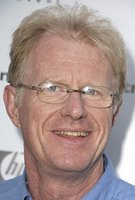
I recognize and applaud my colleagues in the environmental arena for the benefits their efforts and work over these many decades of Earth Days have accomplished. Perhaps the lack of a defining difference between pyrolytic conversion and incineration has clouded the ability of the non-scientific community’s mind to understand the difference.

Please consider comparing the environmental performance of conversion technologies against other methods of recycling, such as smelting plants that are not subject to the same repressive statutory and regulatory restrictions. In addition, consider the economic impact on California’s labor force of exporting recycled materials to China, when they could be put to better use here at home.


In March 2006, a Director of the Bioenergy Producers Association, Paul Relis, wrote an enlightening article for BioCycle magazine tracing the history of recycling and its potential for the future. Mr. Relis has been a chief negotiator in support of CT legislation in Sacramento (AB1090 and AB2118).

Below is the entirety of the article he wrote...

-----------------

Conversion Technologies, Recycling and Renewable Energy subscriber only
by Paul Relis
BioCycle, Vol. 47, No. 3

With the state's recycling rate at over 50 percent but landfilled waste still high, California debates best ways to convert organic residuals into sustainable power - and get support of environmental opponents.

Paul Relis is founding Executive Director of the Community Environmental Council of Santa Barbara, California, and is now President of its Board of Directors. From 1991-1998, he was the Environmental Member of the California Integrated Waste Management Board. In 1998, he became Senior Vice President of CR&R, Inc. - a company which operates transfer stations and MRFs, and is building a green waste composting facility. He has visited conversion facilities worldwide.

THERE is a vigorous debate underway in California over whether or not to encourage the development of conversion technologies (CTs). Conversion technologies refer to systems that can thermochemically (high temperature) or biochemically (low temperature) convert solid wastes now being landfilled into energy, liquid fuels such as ethanol, or chemicals.

The debate has pitted proponents of conversion technologies, mostly very small companies who have spent decades trying to apply specific technologies such as gasification, pyrolysis, and distillation to the management of the solid waste stream against California's major environmental and recycling organizations. Why should there be such a raging debate over CTs in California that has among the most ambitious recycling laws in the nation and progressive renewable energy policy? And why is this debate important to the future of waste and materials management in the U.S.?

The roots of the California debate go back to the mid-1980s when recycling was the long unfulfilled dream of environmentalists and recycling organizations. They were pitted against the incinerator firms, financial institutions and several large local governments such as Los Angeles, San Diego and Contra Costa Counties where proposals were under consideration to build large waste-to-energy facilities that required at least several thousand tons per day of dedicated waste. The facility opponents believed that if these projects were approved, they would doom recycling and foul California's already dirty air.

By the late 1980s, incineration proposals had politically been defeated. The elimination of waste incineration as a disposal option, coupled with a projected landfill crisis in Southern California, caused the California Assembly and Senate to embrace recycling. With the support of California's governor, the nation's most ambitious recycling bill (AB 939) was signed into law in 1989.

This far reaching statute set in motion a multibillion dollar investment in a recycling collection infrastructure - undoubtedly the largest investment by any state in the country. As a result of this investment, California's near 90 percent dependency on landfill in 1990 was reduced by nearly 40 percent by 2005. According to the most recent information from the California Integrated Waste Management Board, the state's diversion rate from landfill is at 50 percent.

While AB 939 extensively promoted recycling, it was also explicitly an antiincineration bill. For the handful of incinerators that existed at the time of its passage, it limited diversion credit for these facilities and discouraged any future development of incineration. It also lumped any technologies even remotely related to incineration, such as pyrolysis and gasification, into the same category as incineration along with distillation. Consequently, for the next 15 years little, if any development of these technologies were undertaken in California.

FACTORS CONVERGE

By 2003, a convergence of factors were beginning to manifest in California that gave rise to taking another look at so called “noncombustion” thermochemical technologies such as gasification. Spiraling energy prices in California spurned on by the Enron debacle and poorly conceived deregulation of the utility industry vastly increased California's expenditures for electricity. By 2004, concerns about global warming along with the reemergence of concerns over landfill capacity, particularly in Southern California, prompted a fresh look at what role CTs might play in California's integrated waste management system.

Responding to these and other considerations, the California Integrated Waste Management Board (CIWMB) was directed by the California legislature to undertake an extensive study of CT and to report back to the legislature on the status of these technologies, their public health impacts and their compatibility or conflict with recycling. The University of California was given a prime contract to evaluate the technical, economic and health impacts of conversion technology while RTI, a private consulting firm, was assigned the task of evaluating what impacts CTs might have on the recycling collection infrastructure.

SEVEN REGIONAL CONVERSION TECHNOLOGY FACILITIES

While these studies were underway, several local governments within the state undertook their own investigations of CTs by soliciting requests for qualifications from conversion technology vendors and subjecting these requests to third party evaluations. Los Angeles commissioned its own independent studies to determine if CTs might help meet its solid waste management needs. In total, more than $3 million have been spent on studies over the past two years to probe CTs' commercial viability, their environmental risks and benefits, and their relationship to continued development of recycling in California.

The Los Angeles study, Evaluation of Alternative Solid Waste Processing Technologies, conducted by URS Corporation, found that with respect to air emissions both thermochemical and biochemical systems are “expected to result in emissions well below regulatory limits.” With respect to life cycle analysis, the study concluded that thermochemical and biochemical conversion technologies could be expected to “create significant energy savings when compared to landfilling. This energy savings results from a combination of syngas and electrical energy production, as well as from materials recovery and recycling.”

According to a recent resource management blueprint for Los Angeles, RENEW L.A., the City of Los Angeles, in spite of its 62 percent diversion rate, still generates 14,000 tons of landfilled waste - enough waste to produce 100-340 megawatts of renewable energy a day or enough electrical power for 100,000 to 300,000 households.

The plan calls for the development of seven regional CT facilities over the next 20 years and argues that these facilities will have the following benefits for the City of Los Angeles:
• Drastic reductions in truck and rail transportation of waste and their associated air quality and traffic congestion impacts;
• Conservation of limited virgin resources;
• Significant reduction in environmental impacts from landfill;
• and Generation of renewable energy.

CONVERSION TECHNOLOGIES COMPLEMENT RECYCLING INFRASTRUCTURE

The findings in the comprehensive study of CTs by the Riverside and Davis campuses of the University of California (UC) are consistent with the L.A. study with respect to environmental benefits, health concerns and renewable energy. In addition, the UC and RTI studies suggest that conversion technologies should complement, rather than conflict with, California's AB 939 recycling infrastructure. This is because most conversion facilities proposed in the state include either front end MRFs to further extract recyclables or extract recyclables within the conversion process itself. Estimates of further extraction of recyclables range from about five to 15 percent and these recyclables would come from the processing of garbage that is not currently being addressed by existing recycling programs. In cities and counties where recycling rates are already at 50 percent or greater, overall recycling rates with conversion technology could range from between the mid-50 percent range to as high as 70 percent.

The UC study found that “CTs provide the potential of converting materials that are currently landfilled into electricity, chemical, or other products such as synthetic diesel and gasoline transportation fuels.” As much as 10 percent of California's electrical demand could be met through the development of CTs. CTs could meet much of California's ethanol demand using currently disposed MSW.

The UC study states that: “Existing data and facilities in locations around the world indicated that conversion technologies can operate within constraints established by regulatory requirements…These factors indicated that it is very likely that conversion technologies with the most advanced environmental controls would be able to meet regulatory requirements in California.”

These findings were based upon extensive information on CTs gathered from around the world, particularly in Europe and Japan where the most conversion facilities exist that have used municipal wastes as a fuel source. Actual emission levels from operating facilities were obtained from government regulators in these countries rather than reliance upon industry sponsored data. In addition, several pilot facilities in the United States provided their data to the UC. Researchers from the UC were allowed to witness the actual emissions testing and review the results.

The UC study concluded that conversion technologies can meet California's regulatory requirements with respect to specific emissions concerns such as dioxins and furans, and that test results suggest that emissions would be many times below the regulatory requirements of the Federal Republic of Germany, Japan, the U.S. EPA and California's South Coast Air Quality Management District.

DEBATE CONTINUES ABOUT MOVING FORWARD

Proponents of CT point to Europe's massive commitment to curbing greenhouse emissions as a rationale for CT development in the U.S. On a personal note, I was in Berlin last winter and visited several thermochemical and biochemical systems in neighboring Brandenburg and Saxony. I met with German officials from the State of Brandenburg and the German Green Party to discuss attitudes towards conversion technologies with respect to global warming, compatibility with recycling and their ability to meet Germany's tough air and other emissions standards. In Germany, and indeed throughout the European Union, global warming is taken much more seriously than in the U.S. Since landfills are a large source of greenhouse gas emissions, the German officials I talked to expressed the position that any system that removes more material from landfill such as recycling, composting and CTs is greatly preferable to continued reliance on landfill.

However, even with these positive findings, many environmental and recycling organizations remain opposed to conversion technology and some are fighting tooth and nail to defeat any proposed facilities. Why is this so? Why would organizations identified with protecting the environment fall on the sword, so to speak, to prevent their use given the comprehensive environmental benefits that the independent studies suggest will ensue from the use of CTs? Answers to these questions from an objective standpoint remain perplexing.

Conditions have changed markedly in California since the state enacted AB 939. Unlike 15 years ago, there are thousands of collection programs for recyclables; hundreds of processing facilities now exist, and they are considered by the state and most local governments to be sacrosanct. At the same time, the state population has grown by nearly more than seven million people and there has been no reduction in per capital waste generation. Disposal remains at nearly 40 million tons, and there is little prospect that recycling programs will grow to significantly impact this figure over the next decade. Meanwhile California faces acute energy shortages in the form of electricity, and it has virtually no in-state sources of ethanol to meet its liquid fuel requirements. Landfills remain one of the largest sources of greenhouse emissions in a state that has an expressed public policy to reduce greenhouse emissions. CTs offer among the few viable means of responding to these critical environmental needs.

In spite of the impartial studies by the state's most esteemed research university, in spite of actual emission test results using post-MRF municipal solid waste (MSW) from California, in spite of the evidence that CTs can contribute significantly to the reduction of greenhouse gases and improve air quality by reducing the transportation of solid waste throughout the state, opposition to CTs by the state's environmental and recycling organizations remains intractable.

At the time of this writing, legislation is being considered that would make conditions for the development of conversion technologies feasible. Negotiations are in progress to try to move this legislation to move forward. Whether these negotiations will prove successful or not, remains to be seen. The outcome will have important implications for the State of California. And to the degree that California is a trend setting state, to the rest of the nation.


technorati , , , , , , ,

Southern California Emerging Waste Technologies Forum

On July 27, 2006, the UCLA Hydrogen Energy Research Consortium played host to roughly 250 area “stakeholders” at The Southern California Emerging Waste Technologies Forum. Mayor Antonio Villaraigosa, State Senator Richard Alarcon, Assemblywoman Cindy Montanez, Councilman Greig Smith, and the City and County agencies responsible for public works and sanitation were among the sponsors. The list of speakers, their bios, and most of their presentations are available online along with the forum's agenda.

The purpose of the meeting was to provide Southern California waste and energy stakeholders the opportunity to learn about Conversion Technologies (CTs) and their potential for helping the state cope with its growing waste disposal problem in light of dwindling landfill alternatives. Also discussed was the potential of capturing the energy content of the waste material to help allay California’s gas import, ethanol import, electricity production, budgetary, employment and pollution problems.

The centerpiece of the forum is the Los Angeles City Council’s ambitious and well-researched RENEW L.A. program, a 20-year plan to divert waste from the county’s numerous landfills to biorefineries. These clean facilities convert roughly 80% of the unrecyclable trash to energy (most likely ethanol) and electricity, drastically reduce greenhouse gases from landfills and waste transport, create skilled "green collar" jobs throughout the city, while they enhance environmental justice in Los Angeles County. The plan was passed unanimously in March of this year and has earned the support of the Mayor's office. Furthermore, it is fully in compliance with the Governor's recently signed BioEnergy Action Plan.

The current obstacle to implementation is state legislature (specifically the Assembly Natural Resources Committee and the Senate Environmental Quality Committee) where for two years proponents have been unable to get action on even the simplest of changes in statute to correct scientifically inaccurate definitions that govern the permitting of these technologies.

The afternoon session was organized around a lively panel discussion of the 5 issues deemed crucial to implementation of CTs in California: What is the best way to achieve zero waste? Can emissions from landfills and CTs be mitigated? How can environmental justice best be achieved? What is the economic viability of CTs? What role do CTs play in energy sustainability?

For approximately 3/4 of the panelists and a sizeable majority of the audience, the need and viability of CTs is not questioned. The status quo of processing and trucking a growing volume of waste to fewer landfills at greater distances mandates that existing CTs be evaluated and deployed in carefully monitored stages to implement the timetable of the RENEW LA plan. Through the cooperation of government, universities, and industry, any problems that occur during deployment can be resolved, but at no time will existing recycling programs be reduced or regional emissions statutes be violated. Indeed, recycling will enhanced dramatically and existing emissions data demonstrates that CTs will provide significant improvement in the reduction of toxins and greenhouse gases.

Among those opposing implementation of CTs was Californians Against Waste (CAW). CAW has been actively involved in the development, negotiation and passage of waste reduction and recycling legislation in California. However, CAW strongly believes there is no basis for counting CTs as recycling at this time and that CTs will, through success, gradually reduce recycling efforts in the state.

Other environmental groups, none of which have expressed any interest in learning about the environmental advances of 21 Century CT technologies, attempted to promote skepticism about the emissions impact of CTs on the health in local communities - objective UC/CE-CERT measurement of emissions data notwithstanding.

The only alternative to CTs offered by its opposition was "source reduction" - reducing the amount of products going to waste by simultaneously educating the public on more efficient waste reduction practices and enforcing new legislation and enforcement policies - requiring manufacturers to redesign their packaging to eliminate waste or take responsibility for the waste disposal of products they sell.

My opinion

1 - The rate at which recycling can increase by source reduction alone is not likely to exceed the amount of additional waste entering the system. Meanwhile, RENEW L.A. is moving forward so that, within 20 years, L.A. will no longer be dependent on landfills for waste disposal. Without the permitting and deployment of CTs, waste disposal in California will become increasingly expensive and environmentally dangerous.

2 - CTs represent a true opportunity to not only expand recycling through mass reduction and conversion into useful products (like electricity, ethanol, and "green" chemicals) but also help California meet its bioenergy goals in the Governors BioEnergy Action Plan.

3 - AB 2118 should be negotiated in good faith with the BioEnergy Producers Association input, and passed immediately so that the investment, R&D and deployment permitting of clean CTs in California can proceed apace.

4 - Only through deployment will the final processes be refined and required emissions data be collected. All parties can be assured that through constant monitoring, new facilities will meet every emissions requirement or they will be shut down until they do.

5 - California is a "can do" state that needs to take advantage of new opportunities to right its own budgetary ship and solve its landfill, waste, employment, electricity, pollution, and renewable fuels problems. Conversion Technologies will help achieve those goals.


technorati , , , , , , ,

Southern California Emerging Waste Technologies Forum

On July 27, 2006, the UCLA Hydrogen Energy Research Consortium played host to roughly 250 area “stakeholders” at The Southern California Emerging Waste Technologies Forum. Mayor Antonio Villaraigosa, State Senator Richard Alarcon, Assemblywoman Cindy Montanez, Councilman Greig Smith, and the City and County agencies responsible for public works and sanitation were among the sponsors. The list of speakers, their bios, and most of their presentations are available online along with the forum's agenda.

The purpose of the meeting was to provide Southern California waste and energy stakeholders the opportunity to learn about Conversion Technologies (CTs) and their potential for helping the state cope with its growing waste disposal problem in light of dwindling landfill alternatives. Also discussed was the potential of capturing the energy content of the waste material to help allay California’s gas import, ethanol import, electricity production, budgetary, employment and pollution problems.

The centerpiece of the forum is the Los Angeles City Council’s ambitious and well-researched RENEW L.A. program, a 20-year plan to divert waste from the county’s numerous landfills to biorefineries. These clean facilities convert roughly 80% of the unrecyclable trash to energy (most likely ethanol) and electricity, drastically reduce greenhouse gases from landfills and waste transport, create skilled "green collar" jobs throughout the city, while they enhance environmental justice in Los Angeles County. The plan was passed unanimously in March of this year and has earned the support of the Mayor's office. Furthermore, it is fully in compliance with the Governor's recently signed BioEnergy Action Plan.

The current obstacle to implementation is state legislature (specifically the Assembly Natural Resources Committee and the Senate Environmental Quality Committee) where for two years proponents have been unable to get action on even the simplest of changes in statute to correct scientifically inaccurate definitions that govern the permitting of these technologies.

The afternoon session was organized around a lively panel discussion of the 5 issues deemed crucial to implementation of CTs in California: What is the best way to achieve zero waste? Can emissions from landfills and CTs be mitigated? How can environmental justice best be achieved? What is the economic viability of CTs? What role do CTs play in energy sustainability?

For approximately 3/4 of the panelists and a sizeable majority of the audience, the need and viability of CTs is not questioned. The status quo of processing and trucking a growing volume of waste to fewer landfills at greater distances mandates that existing CTs be evaluated and deployed in carefully monitored stages to implement the timetable of the RENEW LA plan. Through the cooperation of government, universities, and industry, any problems that occur during deployment can be resolved, but at no time will existing recycling programs be reduced or regional emissions statutes be violated. Indeed, recycling will enhanced dramatically and existing emissions data demonstrates that CTs will provide significant improvement in the reduction of toxins and greenhouse gases.

Among those opposing implementation of CTs was Californians Against Waste (CAW). CAW has been actively involved in the development, negotiation and passage of waste reduction and recycling legislation in California. However, CAW strongly believes there is no basis for counting CTs as recycling at this time and that CTs will, through success, gradually reduce recycling efforts in the state.

Other environmental groups, none of which have expressed any interest in learning about the environmental advances of 21 Century CT technologies, attempted to promote skepticism about the emissions impact of CTs on the health in local communities - objective UC/CE-CERT measurement of emissions data notwithstanding.

The only alternative to CTs offered by its opposition was "source reduction" - reducing the amount of products going to waste by simultaneously educating the public on more efficient waste reduction practices and enforcing new legislation and enforcement policies - requiring manufacturers to redesign their packaging to eliminate waste or take responsibility for the waste disposal of products they sell.

My opinion

1 - The rate at which recycling can increase by source reduction alone is not likely to exceed the amount of additional waste entering the system. Meanwhile, RENEW L.A. is moving forward so that, within 20 years, L.A. will no longer be dependent on landfills for waste disposal. Without the permitting and deployment of CTs, waste disposal in California will become increasingly expensive and environmentally dangerous.

2 - CTs represent a true opportunity to not only expand recycling through mass reduction and conversion into useful products (like electricity, ethanol, and "green" chemicals) but also help California meet its bioenergy goals in the Governors BioEnergy Action Plan.

3 - AB 2118 should be negotiated in good faith with the BioEnergy Producers Association input, and passed immediately so that the investment, R&D and deployment permitting of clean CTs in California can proceed apace.

4 - Only through deployment will the final processes be refined and required emissions data be collected. All parties can be assured that through constant monitoring, new facilities will meet every emissions requirement or they will be shut down until they do.

5 - California is a "can do" state that needs to take advantage of new opportunities to right its own budgetary ship and solve its landfill, waste, employment, electricity, pollution, and renewable fuels problems. Conversion Technologies will help achieve those goals.


technorati , , , , , , ,