Showing posts with label California. Show all posts

August 2, 2010

More Garbage from the CA Senate SEQ


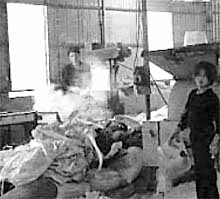
The Puente Hills Landfill is the largest operating sanitary landfill in the United States (and probably the world). It is scheduled to close in 2013.

Now that AB 222 has finally "passed" through the Senate Environmental Quality Committee (SEQ), the question is, does the legislation meet the vision of what has passed through the full Assembly (54-13) and the Senate Utilities Committee (6-1) last year? The answer is a resounding "NO!"

The Senators on the SEQ bowed to the traditional recycling industry lobby and gutted the bill to the point that its authors are loathe to recommend it because it will virtually kill investment in any conversion project in the state. This despite the fact that AB 222 was endorsed by more than 100 credible organizations statewide, including the California Energy Commission, the Air Resources Board and CalRecycle.

This outcome means more overflowing of current landfills and more local municipalities (including the very environmentally astute Los Angeles County Department of Sanitation/Integrated Waste Management Task Force) with their hands tied as they try to improve systems and reduce the amount of money spent diverting over 40 million tons/year of municipal solid waste from landfills. It also means that hundreds of millions in Federal grants to deploy these projects are going to other states, even though the developers and major investors live and work in California.

Here is a snapshot of the current state of AB 222 by its lead promoter, Jim Stewart, Chairman of the Bioenergy Producers Association.

--------------------------
The Senate Environmental Quality Committee Deals a Major Blow to Renewable Energy in California
by Jim Stewart, Chairman of the Board, Bioenergy Producers Association


The world’s organic waste streams represent one of its most promising and immediately available sources of renewable energy. The United States annually generates more than 1.5 billion tons of organic waste. From this single resource this nation could produce enough advanced biofuels to eliminate its need to import petroleum.

Just from the nearly 40 million tons of post-recycled waste that California places in landfills each year, a wide range of 21st Century, non-incineration, non-combustion conversion technologies could sustainably and cleanly produce 1.6 billion gallons of ethanol and 1250 MW of power.

These technologies herald a new era in recycling—the recovery of energy from waste and the recycling of carbon. During the past year, the Department of Energy has provided $600 million in direct grants to support a total of $1.3 billion in biorefinery construction.

The California Air Resources Board has called for the construction of 24 conversion technology plants by 2020 in order to achieve the goals of AB 32 and the Low Carbon Fuel Standard. Ethanol for organic waste is perhaps the only pathway can absolutely can meet the ARB’s goals for greenhouse gas reduction from automobiles under the LCFS.

However, current statute contains scientifically inaccurate definitions and repressive permitting pathways (more rigorous than those required to site a major solid waste landfill) that are driving biobased technology producers and investment capital away from California.

AB 222, as passed by the Assembly and approved by the Senate Utility, Energy and Communications Committee, was designed to address these issues. It would have provided a clear and achievable permitting pathway for biorefinery projects. AB 222 would have qualified the waste feedstocks processed by these facilities as landfill reduction (rather than as disposal) and would have enabled the electricity produced from the biogenic portion of solid waste to count as renewable under the state’s Renewable Portfolio Standard (as does landfill gas).

The bill was consistent with the Waxman/Markey bill, which would qualify the biogenic portion of municipal solid waste as a feedstock for renewable electricity production under the federal RPS. It was similarly consistent with the EPA’s Renewable Fuel Standard (RFS2), which enabled MSW as a feedstock for advanced biofuels production.

However, in late June, the five Democrats on the Senate Environmental Quality Committee, yielding to opposition orchestrated by lobbyists for the traditional recycling industry, stripped AB 222 of its key elements, including the RPS and landfill reduction credits. This despite the fact that AB 222, in the form that passed the Assembly, was endorsed by more than 100 credible organizations statewide, including the California Energy Commission, the Air Resources Board and CalRecycle. Further, it was approved on bi-partisan votes of the Committees that oversee energy issues in both the Assembly (11-0) and Senate (6-1), and by the Assembly itself (54-13).

And now, the Environmental Quality Committee has further amended the bill to create even more restrictive pathways for the implementation of conversion technologies in the state. These amendments place all conversion technologies, both high and low temperature, in “transformation”, a category that equates them with incineration, permanently classifying them as disposal and leaving them subject to the Countywide Siting Element. This statutory provision requires that a project proponent obtain the approval of a majority of city councils representing a majority of the population in a County before he can commence the CEQA process. In Los Angeles County, this would require a project proponent to obtain the approval of a minimum of 45 city councils.

Under current statute, even if the permitting process were successful, it would be at least four years before a solid waste-to-biofuels/green power facility could even begin construction in California. During that time, the state will landfill 240 million tons of post-recycled solid waste.

In 2010, as a nation, we have experienced a massive oil spill in the Gulf--perhaps the most devastating environmental disaster in the nation’s history—we are engaged in two wars in the Middle East, and as a nation we are paying $250 billion annually to import petroleum, a meaningful portion of which is finding its way to organizations whose goals are to destroy this nation’s value system, its economy and its way of life.

300 thermal conversion technologies are operating throughout the world and are meeting all environmental standards of their jurisdictions, and in Europe, these standards are often higher than those of California. All of these facilities create one and the same product—synthesis gas, which can be used to produce pipeline quality natural gas, power, chemicals and other products. More than 100 of these facilities--in Europe, Japan, China and elsewhere--are treating municipal solid waste in the process of producing electricity.
And now, these technologies are being introduced across North America to produce biofuels. They are a key element in enabling this nation to meet its mandate for the production of 21 billion gallons of advanced non-food derived biofuels by 2022.

For these reasons, one would expect the California legislature, particularly its Environmental Committees, to support major initiatives that could assist in reducing the nation’s dependence on fossil fuels.

However, for more than five years, the environmental committees of the California legislature have blocked legislation that would enable the permitting and construction of clean 21st century technologies that could contribute to national security, energy independence, jobs and a better environment for California.
---------------

For further information, contact:
James L. Stewart, Chairman, BioEnergy Producers Association
323-650-5096 jls.sep@gmail.com

technorati , , , , , , , , ,

April 20, 2010

California's top energy, air quality, & recycling agencies support AB222

Environmentalists must stop letting the perfect become the enemy of the possible.
- Governor Arnold Schwarzenegger

For three years I have been writing about the frustrated attempts to get legislation passed through Sacramento that would enable the state's municipalities and utilities to permit diversion of municipal solid waste post-recyclables to conversion technologies that would recover energy, create biofuels and green chemicals, and reduce the volume of post-recyclables moving onto landfills by roughly 85%.

The anti-thermochemical stance of the legislation's detractors who preach that gasification "is just a more advanced form of incineration" has been the non-scientific excuse used most often to obstruct passage. In 2007 Assembly Natural Resources Committee (led by chairperson Loni Hancock of Berkeley, CA) derailed AB1090. The latest iteration of the bill (AB222 sponsored by Republican Anthony Adams and Democrat Fiona Ma) flew through the Assembly and received the support of the Utilities Committee of the Senate before it was two-yeared by the Senate's Environmental Quality Committee (which has now-Senator Loni Hancock on it). This in spite of the diverse and overwhelming support it has received throughout California.

AB222 will again be before the Senate Environmental Quality Committee, probably before the Senate breaks in late Summer. There is much more reason for the Committee to stop their irrational obstruction of this bill. It now has a letter of support from the primary energy, air quality, and recycling agencies of the current administration. More background...

Update on Assembly Bill 222 (by today's Southern California Conversion Technology Demonstration Project Newsletter)
It is anticipated that Assembly Bill 222 (AB 222) will be heard in the Senate Environmental Quality Committee later this Summer, following budget negotiations.

AB 222 is California legislation designed to expedite the introduction of conversion technologies that will produce advanced biofuels and/or green power from carbon-based wastes. With Republican and Democrat co-authors, this legislation has gained bipartisan support amongst the business, environmental, labor, and government sectors. The legislation removes from statute a scientifically inaccurate definition of gasification, establishes a new regulatory category for a "biorefinery" and confirms that the biogenic portion of the municipal waste stream qualifies as a feedstock for renewable electricity under the Renewable Portfolio Standard.

Last Year, AB 222 passed the California State Assembly by a vote of 54-13, after having been approved by a unanimous bipartisan vote of 11-0 in the Assembly Utilities and Commerce Committee. In July, it was approved in the Senate Utilities, Energy and Communications Committee. The Governor has endorsed the legislation, enabling the California Energy Commission to testify on its behalf, and there is significant support for the bill in the State Senate.


Key agency chairs sign letter of support

A letter of support from the executive branch is circulating among the Assembly and Senate leaders and their staffs. The signatories are no less than:
  1. Jim Boyd, Chair of the California Energy Commission
  2. Mary Nichols, Chair of the California Air Resources Board
  3. Margo Reid Brown, Acting Director of CalRecycle (the Department of Resources Recycling and Recovery)
Obstructing this carefully worded and negotiated legislation with this level of support would be a slap in the face of the primary agencies responsible for providing clean energy, clean air, and enlightened recycling processes to all Californians. Their reasons for support are clearly articulated in the letter:
AB222 would allow new non-incineration technologies to be used in the production of renewable biofuels, and electricity from biogenic material diverted from California's landfills. It would achieve this by removing current statutory restrictions that require thermal conversion projects to have zero emissions, a standard required of no other energy generation technology or manufacturing process in the State and one that effectively precludes any municipal solid waste (MSW) conversion technologies from qualifying for California's Renewable Portfolio Standard (RPS). ...

New conversion technologies would assist California in developing local fuel sources as part of the Low Carbon Fuel Standard (LCFS) thereby making better use of resources and providing other benefits...

On February 4, 2010, the United States Environmental Protection Agency (EPA) released its final rule for the Renewable Fuels Standard (RFS2) allowing the biogenic portion of post-recycled MSW to qualify for the use in the production of advanced biofuels. The renewable fuel provisions of AB 222 would make California consistent with the EPA ruling. ...

This legislation is necessary for CalRecycle and local agencies to deploy the solutions they judge, after extremely careful analysis, the solutions they find appropriate, clean, and most affordable to meet AB32, the RPS, LCFS, and other mandates legislated in California.

Los Angeles County Moves Forward with Southern California Conversion Technology Project (From the CalRecycle Conversion Technology Listserv)
On April 20, 2010, the Los Angeles County Board of Supervisors unanimously approved recommendations from the Los Angeles County Department of Public Works to initiate Phases III and IV of the Southern California Conversion Technology Project. Additionally, Supervisor Yaroslavsky introduced a motion that will expedite the County's efforts to identify locations in Los Angeles County for Phase IV of the project. Please click here to view the Board Agenda item.

After an extensive multi-year evaluation process, which included facility site visits, stakeholder meetings, and economic, environmental, and technical feasibility assessments, the Department of Public Works recommendation included:

1) Approval of Memorandums of Understanding between the County and three different project development teams

a. Arrow Ecology and Engineering & CR&R Incorporated ? proposing a 150 ton per day anaerobic digestion process in the City of Perris, to be located at the MRF/TS owned and operated by CR&R Incorporated.

b. International Environmental Solutions & Burrtec Waste Industries? proposing a 184 tons per day pyrolysis process in Unincorporated Riverside County, to be located at the MRF/TS owned and operated by Burrtec.

c. Entech Renewable Energy Solutions & Rainbow Disposal Company ? proposing a 360 tons per day gasification process in the City of Huntington Beach to be located at the MRF/TS owned and operated by Rainbow Disposal Company.

2) Approval of a four-year consultant contract with Alternative Resources Inc. to provide technical, permitting, and funding procurement assistance to each of the demonstration projects and to assist with the technology evaluation and development of Phase IV commercial projects within LA County.

For more information regarding conversion technologies and to view the County's reports please visit www.SoCalConversion.org

The agenda, which includes the official recommendations from the Department of Public Works, may be accessed by clicking here.

----------------
technorati , , , , , , ,

July 19, 2009

California's price for a failure to launch


Chalk one up for the fossil energy status quo.

Last Thursday, as a result of obstructive votes of five members of the California Senate Environmental Quality Committee (SEQ), a crucial piece of renewable energy legislation titled "Assembly Bill 222" has been delayed yet another year. Call it a failure to launch.

If approved, this legislation would have responsibly (and with articulated recycling and environmental safeguards) given statewide municipalities and utilities the necessary authority to deploy new technologies (in particular, gasification and pyrolysis) to meet and even exceed statewide landfill diversion mandates by converting municipal solid waste into biofuels and biopower.

Versions of this bill have been working their way through Sacramento since early 2005. This "band of five" (all SEQ Committee Democrats) voted to delay action:

• Despite the expressed support of nearly 80 organizations in favor AB 222 (vs. 19 against), which was unanimously approved by the Assembly Utilities and Commerce Committee in April, and which passed the heavily Democratic California State Assembly by a vote of 54-13.

• Despite approval of the bill by the California Senate Utilities, Energy and Communications Committee on July 7th.

• Despite national bipartisan initiatives to develop alternative fuels and renewable power - namely EISA, the Farm Bill, the cap and trade bill, the preponderance of state Renewable Energy Standards.

• Despite the President spurring governmental agencies to stimulate the economy by quickly approving development and deployment of renewable technologies with investment and policy incentives.

• Despite California's precedent-setting Global Warming Solutions Act (AB 32), its aggressive Renewable Portfolio Standard, and its ground-breaking Low Carbon Fuel Standard designed to provide cleaner alternatives to fossil fuels and power.

• Despite Governor Schwarzenegger and the California Energy Commission supporting the legislation as a necessary component of his Bioenergy Action Plan.

• Despite a national and California state financial crisis that is the worst since the Great Depression. This legislation would have created jobs and drawn significant private industry investment to the state.

Had the SEQ Committee not interfered the measure was certain to pass the Senate with balanced bipartisan support.

California has a long history of facing crisis after crisis with intelligence, industry, investment, and heroic engineering. It has built paradigm changing technologies in defense, nuclear energy, water and waste management, educational systems, entertainment, environmental practices, computers, and communications that have not only funded the state's phenomenal growth and global influence, but also changed the world.

Not anymore if, as in this case, a few politicians can continue to derail progress when we need it most. Progress to introduce renewable alternatives before our valuable resources run dry. Progress to reduce fossil emissions that threaten public health and global climate change.

Waiting for perfection

What are they waiting for? In a word - "perfection." Opponents to AB 222 are holding out for zero waste and zero emissions.

Zero waste is a universal ideal that we all can agree on whether its energy, natural resources, human capital, efficiency, infrastructure, or funds that is being wasted. The question is not what is the perfect solution, rather how do we improve on the status quo? Inertia is the enemy of progress - it's a form of waste - wasting time.

You can't improve on the status quo by waiting for the perfect answer. We need to support those who spearhead new improvements that build toward better solutions.

That's why Washington is abuzz with the phrase "Perfection is the enemy of the good."

Zero emissions is another example of an ideal that is unachievable without taking progressive steps toward a solution. That's because emissions have many direct and indirect sources. The indirect land use issue is a controversial example of the interconnectedness between sources, processes, and emissions. California's Low Carbon Fuel Standard - and, until recently, the proposed federal cap and trade bill - would handicap certain biofuels for their anticipated direct and indirect impact on worldwide fossil carbon emissions. This is a classic Catch-22.

While we all agree that fossil fuels and fertilizers need renewable replacement, it is unfair to base comparisons of alternatives on their current dependence on fossil fuels for production. Fossil emissions are emitting during production of renewable fuels and power because there are currently no alternatives. We won't have alternatives until we create them. Once we have them we can use biodiesel to replace diesel, and ethanol to replace gasoline, and wood pellets to replace natural gas, etc. But we need to "launch" new alternatives first - and as any Floridians can attest, escaping earth's gravity (launching) takes a significant amount of fossil energy - because that is all we have.

The space shuttle is not perfect. But it is a great example of a technology that resulted from progress through many "good" steps - from Kitty Hawk to Cape Canaveral. And created many byproduct technologies that we cherish today.

Policy-makers need to enable private enterprise ventures to research, develop, and deploy good solutions - not hamper them. Their deployments will still have to conform to economic, environmental, and social sustainability standards.

Enabling legislation is a cheap way for governments to lure investors to take on the financial risk of emerging technologies. Policy delay increases risk and, hence, reduces investment which slows the rate of change and the potential return on investment.

California has failed to launch. Let's hope that other states pick up the gauntlet and lead.

----------------
technorati , , , , ,

April 21, 2009

California reform needed to spur investment in conversion technologies

Californians interested in supporting the clean conversion of post-recyclable waste streams into biopower and biofuels need to help support regulatory reform in Sacramento right now.

California is the crucible for this issue because of its proud history for diverting municipal solid waste (MSW) from landfills through reduction, reuse, and recycling. However there still remains some 40 million tons of post-recycled waste that fails diversion and ends up in a landfill. Why? Because the only conversion technology municipalities are allowed to receive diversion credit for is composting. However, there isn't sufficient market for compost (imagine saying that about affordable biopower or biofuels!). Excess compost gets spread onto landfills as alternate daily cover - so there is no true diversion.

A policy I advocate on this blog would allow municipalities to help meet their diversion requirements using their post-recycled waste as feedstock processed by new clean conversion technologies to create thousands of megawatts of green power and millions of gallons of biofuels.

It is incredible that, in a carbon sensitive world, there would be any opposition to such a sensible, regulated policy - but there is. That's why it is critical that new legislation, AB 222, which came out of the Assembly Rules Committee this past week, receive documented public support when the Utilities & Commerce Committee considers it at a scheduled hearing on April 27th. Late letters can still be important for when the fill ultimately reaches the Senate for a vote.

AB 222 will allow low emission thermal conversion technologies to make biofuels and bioenergy out of this waste. Antiquated regulatory definitions virtually prohibit the deployment of even demonstration size facilities for providing proof of concept and required emissions verification. Without the legislative reforms contained in AB 222, no state municipalities dare build conversion technologies to meet diversion requirements.

Below is an appeal for your written support to enable this legislation to reach the Assembly and then the Senate floor for a vote. Please follow the instructions for submitting a letter of support and fax it in today.

---------------
Letter from the Bioenergy Producers Association
From Chairman of the Board Jim Stewart

The BioEnergy Producers Association is pursuing legislation to expedite the permitting and implementation of conversion technologies for the production of renewable energy from the state's organic waste streams.

The legislation creates a new category in statute for a "biorefinery," which is broadly defined as a facility that uses "non-combustion thermal, chemical, biological and/or mechanical processes to produce renewable fuels, chemicals and electricity from any carbonaceous materials.

It will remove from statute a scientifically inaccurate definition of "gasification," which requires zero oxygen in the process and zero emissions from the entire facility, a standard required of no other manufacturing process in the state.

The bill, AB 222, has been moving forward very quickly. It came out of the Assembly Rules Committee this past week and was referred to the Utilities & Commerce Committee, which has scheduled a hearing on April 27th.

Its co-authors, Fiona Ma and Anthony Adams have asked for letters of support, and these letters need to be faxed to the Utilities & Commerce Committee before 5:00 p.m. on Tuesday, April 21st in order to be acknowledged and listed on the Committee's staff report.

We would be pleased if you could submit such a letter. It should be addressed to Assembly Member Felipe Fuentes, Chair, Utilities and Commerce Committe and faxed to Edward Randolph (the Committee staff member who is preparing the analysis of the bill). The fax number is (916) 319-3899. I am attaching a copy of AB 222 and a bill summary, should you need it for reference. We have a comprehensive web site which you may find of interest, www.bioenergyproducers.org.

Many thanks.
Jim Stewart
Bioenergy Producers Association
Chairman of the Board
323-650-5095

----------------------------
Passage of the bill will:
• Expand the beneficial use of California’s waste streams, and in so doing, stimulate economic investment and provide high level green collar manufacturing jobs here at home, rather than exporting materials to the Far East, India and Nigeria, where essentially no environmental standards exist.

• Significantly reduce the life-cycle greenhouse gas emissions of biofuels and assist the State in reaching its AB 32 GHG reduction goals;

• Reduce statewide dependence on landfills and their associated methane production and waste transport costs;

• Provide alternatives to the open-field burning of agricultural residues and the agricultural land-spreading of biosolids;

• Promote energy independence and national security by enabling the in-state production of advanced biofuels, rather than importing petroleum from the Middle East or ethanol from the Midwest (one billion gallons in 2008);

• Reduce by up to 90% CO2 emissions from automobiles as compared to an energy-equivalent amount of gasoline,

• Help California achieve the goals of its Renewable Portfolio Standard, Low Carbon Fuel Standard and Bioenergy Action Plan.

----------------
technorati , , , , , ,

October 20, 2008

California's Renewable Energy Disconnect

Snatching Defeat from the Jaws of Victory

California is a study of trends and counter-trends.

On one hand we have an "Action" governor who commissions and signs executive orders like the California Bioenergy Action Plan that calls for collaboration between the State government, academia, NGOs, and private industry to tackle our energy deficit problem using bioenergy. The State also has a legislature that courageously drafted and passed its own Global Warming Solutions Act (AB32) that sets objectives for reducing carbon emissions in the state to be administered by its California Air Resources Board (CARB).

On the other hand we have a counter-trend that obstructs, as it has for many years, the economically sustainable means to deploy clean technologies that would go a long way toward helping municipalities meet the targets outlined in waste management legislation. In view of the desperate condition of California's budget and the national credit crisis, economic sustainability will not be achievable without private capital and free enterprise.

It is this "disconnect" that threatens the meaningful advancement of technology to solve urban waste management and carbon emission problems.

How is this "snatching defeat from the jaws of victory"? The groups that have successfully championed urban recycling that has played a significant role to reduce landfill growth are some of the most vociferous groups frustrating deployment of the most efficient technologies for converting unrecyclable waste into clean bioenergy fuels and power. Technologies that would, in effect, greatly expand recycling are made to languish as the landfills that are soon to close continue to fill to overflowing.

Perhaps the most articulate voice identifying this dichotomy is Dr. Kay Martin, Vice President of the Bioenergy Producers Association (BPA). The mission of this California lobbying group is to advance the development and commercialization of sustainable, environmentally preferable industries that produce power, fuels, and chemicals from agricultural, forestry, and urban sources of biomass and plastic wastes. Here is a brief bio of the author from the BPA website:
Over the past several years, Dr. Kay Martin has become a leading proponent for the commercialization of conversion technologies and new product markets for biomass fractions of the municipal waste stream, including renewable energy, transportation fuels, industrial chemicals, and a variety of other petroleum replacement products. She is currently a member of the Executive Board of the California Biomass Collaborative and, nationally, sits on the Board of Directors for the New Uses Council and on the Advisory Board of the Biobased Manufacturers Association.

She writes knowledgeably about the disconnect growing between California state objectives (as represented by its Bioenergy Action Plan and Global Warming Solutions Act) and the "decades-old hierarchical framework" that defines, with considerable unscientific bias, what conversion technologies are acceptable and which are not.

With the highly warranted concern for status quo technologies that contribute greatly to ghg and global warming, we are at a time when all promising technologies, especially those with successful track records elsewhere on the planet, should be welcome for demonstration deployment and incentives as long as they meet or exceed emission standards already in place. Otherwise, the status quo remains.

Here are the opening paragraphs of an article Dr. Martin published through MSW Management magazine in its October 2008 issue about this disconnect and the need for a more inclusive technological policy toward permitting and incentives.

----------------
California's Renewable Energy Disconnect
by Dr. Kay Martin

Governor Arnold Schwarzenegger, in announcing his executive order to expand biofuels production, stated:
“Turning waste products into energy is good for the state’s economy, local job creation, and our environment. By implementing biomass programs in California, we will help fight critical waste-disposal and environmental problems, including the risk of wildfires, air pollution from open field burning, and greenhouse gas emissions from landfills.”

California’s single largest source of biomass is found in the MSW stream. According to a recent state-sponsored biomass-resource assessment, 38 million tons of MSW biomass are generated each year, or 1 dry ton per person. Annually, about 6-8 million tons of these organic materials are utilized to produce compost and mulch, and an additional 1.5 million tons are used to produce power by traditional biomass burn facilities. The remainder, about 70%–75% of the more than 40 million tons disposed annually, represents a tremendous untapped resource for in-state biopower and biofuel production.

Technologies that can safely and efficiently produce alternative energy from biomass-waste feedstocks are now commercially available. Given the state’s vanguard energy initiatives, the runaway cost of petroleum, increased global-warming concerns, and a willing set of new industry partners, one would expect to find a wealth of state incentives for biorefinery development. Unfortunately, this is not the case. Current laws and regulations are, in fact, skewed to prevent this.

The root problem is a chronic disconnect between California’s energy and waste-management policies. New state bioenergy initiatives call for the creation of a favorable legal, regulatory, and economic environment to stimulate industry investments in technologies that utilize biomass for green power and green fuel production. Waste-management policy, in contrast, is mired in a decades-old hierarchical framework that artificially limits bioindustry access to these same resources. It does so by favoring certain landfill-diversion technologies and products over others through the maintenance of statutory barriers and the granting or withholding of incentives.

To read the entire article, please click for MORE.

------------
technorati , , , , , ,

August 16, 2008

California "discriminates" against thermochemical CTs

Aligned with the goals of the California Bioenergy Action Plan there is a new amendment to a California Senate Bill (SB 1252) that seeks to expand the range of technologies that are sanctioned for the conversion of green and municipal waste into biofuels. It would, for instance, "greenlight" projects like the new BlueFire Ethanol demonstration facility being built in Lancaster, CA.

Coming AFTER the recently awarded conditional use permit for BlueFire Energy by the Los Angeles Public Utilities Commission the amendment to SB 1252 appears to be a begrudging acknowledgement that public support for innovative technologies that convert waste into biofuels is on the rise. Better jump on the public opinion train before it leaves the station.

Unfortunately, the wording in the amendment is highly selective in defining what kind of conversion technologies are now acceptable. Simply put, cold technologies are now in but hot technologies are still out. This is nothing unique, according to Dr. Kay Martin, one of most respected advocates for California waste management reform and a member of the Bioenergy Producers Association (BPA):
Aside from this bill, the same kind of discriminatory embargo of "high-temperature" technologies appears in two other bills, AB 2640 (Huffman) and AB 2866 (DeLeon), each of which exclude these technologies from state grant funding eligibility. The BPA drafted "oppose unless amended" letters to the authors of these bills as well (see SB 1252 response below).

The bottom line is that there is an unavoidable recognition that significant new landfill diversion in CA requires new tools--but there is also a pervasive bias for composting, and an enduring blockade of any proposals that facilitate development of thermal processes that utilize MSW feedstock.

Apparently, the California legislature will have to be shamed by other states into accepting thermochemical remedies before it will permit deployment here. Besides killing investment initiative, it appears to be a blatant attempt to curb municipal interest in these technologies. Courageously, Los Angeles utilities who are looking into the barrel of its landfill crisis are moving ahead with their evaluation and likely deployment of thermochemical solutions without the State legislature's "blessing."

The California legislature, like its Ninth Circuit Court, are playing politics with issues that are technological in substance. This is becoming increasingly true as concern about energy, the environment, and global warming "heat up." Ironically, it is the "progressive" aisle that is being used to stop innovation while the conservatives want to spur development in new conversion technologies.

In view of the urgency of the drivers of change (national security, oil dependence, greenhouse gas emissions, balance of trade, fuel carbon content, revamping the energy infrastructure, etc.) it seems to be a poor time for the legislature to be exclusionary of a range of thermochemical conversion technologies that are already being used in Europe and Asia - not to mention advocated and incentivized for development funding by the U.S. Congress and Department of Energy.

In February, I attended the annual Renewable Fuels Association conference in Orlando Florida. One of the keynote speeches was given by Peter Hart of Hart Research Associates - a national polling firm. He reported that a recent poll his company ran asked the question:
In which approach should we invest the most resources and efforts to address our energy problems?

The response in favor of advancing new technologies was overwhelming.
• 51% said we should "Invent our way out of the problem: develop renewable sources."
• 28% responded "Conserve our way out of the problem: energy efficiency, conservation policies/programs."
• 17% said "Drill/mine our way out of the problem: find domestic fossil fuel sources."

Not surprisingly, most Americans believe that technological innovation is the best way to go - for developing renewable sources and energy efficiency. That should be especially true in California where many of the significant paradigm shifts of the last century have been successfully germinated, researched, nurtured, funded, marketed, and deployed. For the Senate to play politics with technological innovation is distinctly unAmerican and, I would submit, un-Californian.

In light of the profound stimulus for biofuels development contained in the 2007 U.S. Energy Bill (aka, EISA), now is the time to pull all the stops restricting innovation that provides solution to our energy, environment, and global warming challenges. This amendment should greenlight thermochemical solutions to waste management in addition to the cold ones currently mentioned.

For the California Air Resources Board to draft a Climate Change Scoping Plan that targets waste management but excludes thermochemical conversion technologies from being an "arrow in the quiver" is short-sighted and political non-science.

Below is a letter sent to the authors of the amendment by the BioEnergy Producers Association that succinctly states their concern about the anti-thermochemical technology bias contained in the bill. Will the California legislature drive the train or continue to wait in the station as other states take advantage of our profligate waste of initiative?

----------------
An open letter from the Bioenergy Producers Association

To: Senator Don Perata
California State Senate

RE: SB 1252 - OPPOSE

The BioEnergy Producers Association is an alliance of companies dedicated to the environmentally sensitive manufacture of advanced biofuels, chemicals and green power from agricultural, forestry and urban biomass and plastic wastes. Among others, our membership includes electric utilities, waste haulers, biobased technology providers, engineering and consulting firms from all areas of the state.

The technologies we advocate, which include thermochemical/biochemical processes, represent California’s best hope for creating alternatives to its escalating costs of motor fuel and electricity, and its dependence on foreign petroleum. These new technologies could potentially produce 2.7 billion gallons of advanced biofuels and 2,500 MW of power from the 42 million tons of post-recycled municipal solid waste that are being placed in California’s landfills each year.

As more than 100 of these projects are now operating in Europe and Asia, and the Department of Energy is investing millions of dollars through grants and loan guarantees to introduce these technologies commercially in the United States, it is mystifying why the California legislature has so consistently, and for so long, refused to take action to encourage investment in, and expedite the implementation of, these technologies in this state. Indeed, it has established a pattern of direct economic and legislative discrimination against these technologies.

The latest example is SB 1252, of which you have just become a co-author. Here is why:

1. The definition for "lignocellulosic ethanol processing," as incorporated in SB 1252, is inaccurate, in that it is specifically limited to, and reserved for, the sugar platform via acid or enzymatic hydrolysis. The definition fails to recognize that ethanol can also be efficiently and economically produced from cellulosic materials through the biological fermentation of syngas in an engineered and controlled environment. The recognition of multiple technologies and pathways for ethanol production is consistent with the Bioenergy Action Plan and central to the objectives of AB 118 and the Low Carbon Fuel Standard.

2. The bill is discriminatory on its face by favoring one production pathway (the sugar platform) and technology (hydrolysis/fermentation) over all others. The granting of reduced permitting standards (transfer/processing station) and diversion credit to a single class of companies while denying these benefits to others is directly contrary to existing State policy for bioenergy development and in-state production of alternative fuels.

3. By limiting its definition of “lignocellulosic ethanol processing” to acid and enzymatic technologies [Section 40149 (a)], the proposed bill enables such technologies to be permitted as transfer or processing stations, while continuing to require the permitting of thermochemcial technologies as major solid waste landfillls. The difference in both time required and the cost of complying with the permitting process creates a market advantage for acid and enzymatic processes that is contrary to the principal of equal competition under law, and will provide “lignocellulosic” technologies, as defined in your bill, with a significant lead time to market.

4. By allowing waste streams that are consumed by acid and enzymatic technologies to qualify for a diversion credit, and by excluding thermochemical technologies from this provision, it denies municipalities of any incentive to make their waste streams available for processing by companies that are investing in clean thermochemical technologies. This wholly discriminatory action by the legislature denies these innovative technologies a level playing field and places them at a distinct competitive disadvantage.

This year, despite achieving a recycling rate of 54% (14% of which, by the way, is comprised of green wastes that are being placed in landfills for use as alternate daily cover), 42 million tons of post-recycled waste will be sent to the state’s landfills, more than was being landfilled in 1989, the year AB 939 was passed. As the state’s population is expected to grow by some 10 million people over the next 25 years, this trend cannot help but continue.

We submit that it will be impossible for the state to achieve the levels of landfill diversion mandated in SB 1252 without the application of all available technologies for waste conversion. Unfortunately, the hostile climate for thermochemical technologies being fostered by the state legislature is forcing the proponents of these technologies to construct their plants in other states, and along with them are going millions of dollars of Department of Energy grants and loan guarantees.

The victims of these policies, and bills like SB 1252, will be the people of California, who will be denied an efficient path to low-cost, locally-produced alternatives to gasoline and a cleaner environment.

The BioEnergy Producers Association strongly opposes the provisions of SB 1252 and the manner in which they are being inserted into this bill without adequate public discussion at the end of the 2008 session.

Sincerely,


James L. Stewart,
Chairman of the Board

----------------
technorati , , , , , ,

July 29, 2008

Bioenergy Producers comment on California's Climate Change Scoping Plan

California Senator David Roberti (ret.) is a public servant of the first magnitude for California. I have met Sen. Roberti several times and hold him in highest esteem for his intelligence, his leadership, his respect for the lawmaking process, and socially sensitive policymaking. During his 28 years of service in the California legislature and 13 years of service as President Pro Tem of the California State Senate he provided superior understanding of the nature and process of governmental actions.

Relevant to California recycling and waste management law, he is also intimately familiar with issues that permeate the waste, recycling, and hazardous waste industry. David was chief Senate negotiator of AB 939, California’s landmark waste management legislation, and the author of California’s Hazardous Waste Management Act of 1986, the Hazardous Waste Reduction Act of 1989, as well as legislation establishing the California Hazardous Waste Hotline. After retiring from the Senate he was a member of the California Integrated Waste Management Board for four years. He is an innovator and friend of recycling who seeks to expand it in a clean and sustainable way.

Besides his law practice Roberti is also President of the Bioenergy Producers Association.
The mission of the BioEnergy Producers Association (BPA) is to advance the development and commercialization of sustainable, environmentally preferable industries that produce power, fuels, and chemicals from agricultural, forestry, and urban sources of biomass and plastic wastes.

Founders of this organization include some of the top waste management experts in California as well as two of the cellulosic ethanol technology pioneers - BlueFire Ethanol and New Planet Energy.

With such an experienced brain, law, and business trust at its disposal, the California Air Resources Board should take special note of the following comments submitted by Sen. Roberti on behalf of the BPA concerning the "Recycling and Waste Management" section of their California Climate Change Draft Scoping Plan.

--------------------
COMMENTS ON CARB CLIMATE CHANGE DRAFT SCOPING PLAN
(June 2008 Discussion Draft)

The BioEnergy Producers Association (BPA) is a coalition of private companies and public agencies dedicated to the development and commercialization of environmentally preferable industries that produce renewable sources of power, fuels, and chemicals from agricultural, forestry and urban biomass wastes and other carbonaceous materials. Our membership includes bioenergy firms, electric utilities, and waste management companies.

The BPA has reviewed the “Recycling and Waste” section of the Climate Change Draft Scoping Plan, and requests CARB’s consideration of additional measures for Landfill Methane Control. Landfill Methane can be controlled by disposing of carbon-based materials that would otherwise be landfilled in the process of producing liquid and electric energy using clean thermochemcial conversion technologies.

Specifically, the Recycling and Waste Sector Preliminary Recommendation should mirror and complement strategies outlined for the agricultural sector by encouraging the use of urban biomass wastes for sustainable energy production. Deployment of bioenergy strategies is consistent with the Bioenergy Action Plan, the Low Carbon Fuel Standard (LCFS), and AB 32 GHG reduction goals for the following reasons:

Landfill Abatement Potential

The Draft Scoping Plan recognizes fugitive landfill methane gas emissions as a major GHG precursor, and calls for measures to reduce the volume of materials flowing to land disposal. Existing source reduction, recycling, and composting programs are credited with attainment of the state’s 54% diversion rate, and the Plan places principal reliance upon the expansion of these programs to reduce disposal tonnages in the future, virtually ignoring the potential to use these waste resources in the clean production of liquid and electric energy.

Despite the success of its recycling and composting efforts, California’s high disposal rate has remained virtually unchanged for the past 20 years. 40 million tons of municipal waste were landfilled in California in 1989, the year AB 939 was passed. This year, despite the progress of recycling, 42 million tons of waste will be placed in the state’s landfills. As the state’s population is expected to grow by some 10 million people over the next 25 years, this trend is expected to continue.

It is folly to adopt the position that the volume of material that is being placed in California’s landfills can be significantly reduced through source reduction, traditional means of recycling and composting alone. All methods of disposal must be incorporated in any effective plan, and this includes the complete disposal (i.e., destruction) of carbon-based wastes in the process of producing the liquid and electric energy so desperately needed by the state.

Approximately 70% of the residual materials placed in landfills consist of various types of biomass, only a portion of which may be feasibly composted or recycled. In short, new tools are needed. For example, compostable organics (i.e. food and vegetative wastes), comprise only about 25% of this stream. Similarly, there is no estimate of additional biomass materials, such as paper, which may be recovered through intensified commercial recycling efforts, although markets for the major portion of this stream may have already been optimized, with residuals having limited commodity market value.

In contrast, new biomass conversion technologies, such as in-vessel hydrolysis/fermentation and thermal/fermentation processes, have the potential to convert the full spectrum of landfill-bound carbonaceous waste materials into renewable energy products, including power, fuels, and chemicals. Because of their unprecedented potential to divert waste materials to beneficial use, the development of clean technology bioenergy facilities is an essential and necessary component of future landfill abatement strategies.

GHG Reduction Potential

The Draft Scoping Plan notes that commercial recycling and composting programs “could have substantial greenhouse gas benefits but their in-state reductions have not been quantified at this time.” Indeed, data on the effectiveness of current waste management practices as climate change strategies are both inconclusive and incomplete.

Composting operations, for example, have their own set of air quality concerns, including VOCs and GHG precursors. In fact, an independent study recently completed by the Los Angeles County Sanitation Districts1 concluded that placement of urban green waste in landfills as alternative daily cover was superior to composting these materials in terms of net GHG emissions.

The climate change benefits of recycling are generally assumed to derive from the avoidance of virgin material extraction and reintroduction of recovered materials with “intrinsic energy value” back into the remanufacturing process, although the Draft Scoping Plan admits that such benefits may not occur in California. Indeed, the majority of California’s recyclables leave the state for distant domestic or foreign markets, with the largest volume of these commodities, namely paper and plastics, being shipped to China.

The life cycle analyses on which recycling climate change benefits are based seldom calculate the global GHG impacts of trans-Pacific shipping, or of transferring the remanufacturing burden to developing nations where environmental controls are minimal or nonexistent. These atmospheric industrial pollutants drift eastward and find their way back to California in a matter of days, contributing further to the state’s GHG reduction challenge.

The CIWMB’s own studies point out the critical need to both reevaluate and expand the range of technologies employed to meet future landfill abatement and climate change objectives. For example, a comprehensive life cycle analysis of waste management practices completed in 2004 by the Research Triangle Institute2 concluded that new waste conversion technologies (acid hydrolysis, gasification, and catalytic cracking) were superior to recycling and composting with regard to energy balance, NOx emissions, and carbon emissions. Similarly, a 2006 study of thermal waste conversion technologies prepared for the CIWMB by UC Riverside3 stated:
“If conversion technologies were able to process a significant portion of California’s waste that is currently landfilled, benefits could be realized in a number of areas. These include reductions in overall greenhouse gas emissions, fugitive landfill gas emissions, and diesel truck emissions. On the energy production side, the avoided costs and impacts in exploration, production, and transportation of traditional fuels could be substantial.”

This same study concluded:
“Thermochemical technologies can process a wider variety of feedstocks and can have a greater effect on landfill reduction. Thermochemical technologies can also produce a larger variety of products, which can displace the need for non-renewable sources of energy and fuels. Other indirect effects include eliminating diesel truck trips and reducing landfill gas emissions.”

Thermochemical conversion technologies are clean technologies because nothing enters the atmosphere as a result of the gasification (waste disposal) step. The resulting synthesis gases and waste heat from the processes can be converted to liquid and electric energy. The opposition to conversion technologies that is influencing legislative and administrative policy in California stems from those who refuse to accept that 21st century technology can achieve environmentally superior waste-to-energy technologies; from the traditional recycling industry which wants to suppress competition for the state’s waste streams and from waste management firms that view conversion technologies as threats to landfills.

It is time for the state to look past these short-sighted positions and embrace these emerging technologies with the same commitment as the federal government, other states and nations. More than 100 of these plants are now operating or will be constructed in Europe and Asia during the next decade.

California should be a leader in encouraging such technologies.
However, private enterprise will continue to take these projects elsewhere until the state adopts a practical, efficient and supportive statutory and regulatory environment for their implementation and operation.

Recommendation

The BioEnergy Producers Association supports the expansion of California’s source reduction, recycling, and composting programs. At the same time, we urge that new clean-technology bioenergy strategies be applied to the state’s growing post-recycled waste stream in order to meet urgent landfill abatement and climate change goals. Timely deployment of waste-based biorefineries can provide a vehicle for integrating California’s renewable energy, AB 118, and AB32 policy objectives.

References:
1 Evaluation of Green Waste Management Impacts on GHG Emissions, Alternative Daily Cover Compared with Composting. Los Angeles County Sanitation Districts, April 2008.
2 Life Cycle and Market Impact Assessment of Noncombustion Waste Conversion Technologies. Prepared for the CIWMB by the Research Triangle Institute International, 2004.
3 Evaluation of Environmental Impacts of Thermochemical Conversion Technologies Using Municipal Solid Waste Feedstocks. Prepared for the CIWMB by the University of California , Riverside, April 2006.


----------------
technorati , , , , , , ,

July 2, 2008

CA Draft Scoping Plan comment:
Recycling and Waste

This is one of a series of comments submitted to the California Air Resources Board for their draft version of the California Climate Change Draft Scoping Plan. Other BIOenergy BlogRing comments are linked here:
Challenge the Status Quo
Recycling and Waste
Sustainable Forests

----------------

The Draft Scoping Plan correctly identifies recycling and waste management as a focus area for mitigation of greenhouse gases. According to CARB's own estimates, there are 40 million tons of unrecycled waste pouring into California's landfills each year. This is roughly equal to the amount that was accumulating before California's very successful recycling policies were enacted twenty years ago.

The California Integrated Waste Management Board (CIWMB) needs to pursue a more aggressive approach than merely extending methane capture and composting solutions. California's waste management companies already lead the nation in their efficiency for capturing methane from landfills. The closure of landfills, not methane capture, is the urgent problem that requires attention.

Composting is not a solution for two reasons: 1) the resulting compost does not meet a consistent purity standard to make it marketable and 2) the demand for compost is so low that these programs are not economically sustainable.

Environmental sustainability will only come with economic sustainability. For this reason Zero waste as currently defined by some recycling groups is an unattainable idealistic vision for which the costs will grow geometrically as it approaches zero percent. The biggest reduction in the rate of landfilling will come if clean conversion technologies, which are economically sustainable, are developed as an extension of recycling.

Most unrecyclable trash can be used for generating renewable electricity or converting into carbon-neutral biofuels. Some of our biggest landfills in our largest cities are scheduled to close within the next decade necessitating trans-shipment to other sites - sometimes hundreds of miles away. This is a waste of GHG emitting trucking and rail energy (see independent 2005 UC/Riverside analysis). Instead, conversion technologies sited at waste sorting facilities, a plan already under development in Los Angeles, can cleanly reduce the volume going to landfills by approximately 85%.

Without question, municipalities should receive diversion credit for redirecting unrecycleable biomass from landfills to conversion technologies that can cleanly produce bioenergy and bioproducts from the refuse.

I personally believe there should be a recycling integrity clause in the Scoping Plan that insures that all recycled waste is turned into products within California to reduce and control global GHG emissions. That is the only way that the hard choices about waste stream recycling, greenhouse gas emissions, and economic sustainability can be honestly addressed. Currently most recyclables are shipped to China (at great GHG expense) because of that country's poor wages, lack of workers rights, and appallingly low pollution standards.

----------------
technorati , , , , ,

November 2, 2007

Capturing energy from unrecycleable waste

Implementing new technologies to solve chronic problems is hard work. A generation filled with expectations of instant gratification is sure to be frustrated by the seemingly slow pace of change to correct obvious environmental challenges.

Take recycling for example. In the last twenty years we have made great strides to reduce, reuse and recycle trash from our waste streams as we hover around 50% diversion from landfills throughout major portions of California. And yet, with the simultaneous growth of volume of trash, we seem unable to reduce beyond that threshold.

Beginning in 2004 the County of Los Angeles engaged in a program to take a major leap forward in reducing the accumulation of seemingly unrecycleable waste that ends up going from county material recovery facilities (MRFs) to landfills. Their vision is to deploy emerging conversion technologies at the MRF that can cleanly reduce trash volume by as much as 85% without emitting toxins or greenhouse gases into the atmosphere. As a substantial bonus, renewable bioenergy could be captured through the generation of green electricity and/or biofuels - depending on which specific technology is chosen.

A team of seasoned experts have just issued an evaluation report of their progress to date. Titled the Los Angeles County Conversion Technology Evaluation Report: Phase II - Assessment it details the thorough screening and evaluation of technologies from throughout the world - Israel, Japan, Europe, and the United States - that are competing for deployment at one of the county's best suited MRFs.

In recognition of the public's interest in the program's operations and environmental sustainability, public outreach programs and state regulatory reform efforts are already underway. A decision on the final site and technology to be funded will be made in early 2008. In view of the environmental costs of doing nothing and the painstaking efforts the Department of Public Works and allied agencies are making to deploy a solution that is in the best interest of all stakeholders, the decision by the parties involved in this effort is certain to be one that deserves public support.

Below is the latest (October 31, 2007) press release on the report.

------------------------------
COUNTY OF LOS ANGELES RELEASES FINDINGS ON NEW ALTERNATIVES TO LANDFILLS
County report finds viable conversion technologies to tackle Southern California's looming trash problem

Los Angeles - 36,000 tons per day! That's how much trash is deposited into landfills on a daily basis from Los Angeles County. Within a few short years, many of those landfills will be reaching capacity. This includes the Puente Hills Landfill, currently the largest operating landfill in the United States, which will close in 2013. That leaves Los Angeles with one very large problem.

After years of exhaustive research and evaluation of conversion technology facilities from around the world, the County of Los Angeles has announced the official release of a report summarizing its findings and outlining the next steps in its conversion technology program. In the next year, the County will select one or more projects to be among the first commercial-scale demonstration facilities in the United States, laying the groundwork for a fundamental shift in how the region deals with its garbage.

"Los Angeles County is promoting cutting edge technologies that have been proven effective in Japan, Israel and Europe. Trash doesn't have to be a problem, it can be a resource for clean energy and other marketable products," stated Paul Alva, chair of the County's Alternative Technology Advisory Subcommittee.

Conversion technologies encompass a variety of advanced processes that convert normal household trash into renewable energy, biofuels and useful products. These technologies provide an alternative to landfills by offering a clean and safe way to turn residual trash (which cannot be recycled economically) into a valuable resource.

"Through first hand evaluations of operational facilities in Europe, Israel, and Japan, we have found that conversion technologies are viable and environmentally friendly means of managing our solid waste," said Alva. "These technologies offer real solutions to California's waste and energy crises."

The report identifies four viable technologies that are capable of managing Southern California's residual waste in a cost-effective and environmentally sound manner. In addition, the report identifies four recycling facilities where a conversion technology facility could be co-located. The County will request that these "short-listed" technology developers and recycling facilities form partnerships and submit formal proposals to be among the first commercial-scale conversion technology demonstration facilities in the United States. Early next year, a competitive bid process will determine which project will receive the County's support. A final decision will be announced by mid-2008.

The technology finalists are: Arrow Ecology (anaerobic digestion); International Environmental Solutions (pyrolysis); Interstate Waste Technologies (gasification); and Ntech Environmental (gasification). The site finalists are: Del Norte Regional Recycling and Transfer Station (Oxnard); Perris MRF/Transfer Station (Perris); Rainbow Disposal (Huntington Beach); and Robert A. Nelson Transfer Station and MRF (Rubidoux).

In conjunction with the report's release, the County has launched a new and improved conversion technology Web site. The www.SoCalConversion.org.

The mission of the Southern California Conversion Technology Demonstration Project is to evaluate and promote the most promising conversion technologies from around the globe, and work with communities throughout the region to develop demonstration facilities that showcase the technical, economic and environmental viability and benefits of conversion technologies.

----------------
technorati , , , , , , , ,

July 31, 2007

Navigating to Zero Waste in California

The non-profit California Resource Recovery Association (CRRA) recently held its 31st annual CRRA Conference and Trade Show in the coastal city of San Pedro in Los Angeles County attracting recycling professionals from throughout the state. The theme of this year's event was "Navigating to Zero Waste." As a global leader in the environmental sustainability field...
The CRRA works to expand markets for recycled materials, promotes sustainable materials policies and is a clearinghouse for information, innovation, and industry and governmental initiatives. CRRA newsletters, workshops and conferences provide up-to-the-minute information on issues that shape the recycling and composting fields.

Responding to the goals of California's landmark Integrated Waste Management Act (AB 939) of 1989 the CRRA is to be credited for helping communities throughout the state divert over 54% of its urban waste from landfills through recycling. What goes unrecorded is the amount of waste that never makes it to the municipal recovery facilities (MRFs) through many of the coordinated programs it has helped to foster and implement to significantly reduce the source of waste. This is achieved by identifying major sources of waste production and helping the producers recognize their responsibility to streamline wasteful and waste producing practices.

Unfortunately, "Navigating to Zero Waste" will never be reached simply through application of the 3 R's (Reduce, Reuse, and Recycle) using existing technologies at the rate at which waste grows in the state. Even if 60% of waste is diverted, the same principal volume is likely to remain. This threatens urban landfills like L.A.'s vast Puente Hills landfill (which will close in 2013) and a San Diego landfill (which will close in 2012) and other close proximity urban repositories. The remaining refuse will then be shipped at great expense and fuel usage to outlaying landfills as far as 200 miles away.

So it was heartening to see that two of the plenary speakers were Councilmember Greig Smith and California Integrated Waste Management Board (CIWMB) member Rosalie Mulé.

Greig is a refreshing example of a local politician who responds to the voting public by listening to their concerns, enlisting professionals to create a solution, and making sure that the solution gets significant political support that will outlive the terms of the signatories. L.A.'s 20-year RENEW LA plan obligates the Los Angeles Bureau of Sanitation to divert unrecycled trash to biorefineries located at MRFs thereby reducing waste volume by 85% while co-generating electricity and very possibly producing biofuels (biooils and ethanol). He reported that selection of the exact technology to be implemented at the first site will be made later this summer.

Rosalie Mulé was appointed to the CIWMB by Governor Arnold Schwarzenegger because of her experience working in the private sector waste industry. She reiterated the Board's commitment to advancing programs that minimize waste, manage landfills, promote producer responsibility, and maximize waste usage. She applauded the efforts of organizations such as CRRA to make California a leader in the world for how to create and implement recycling programs. During her speech she stated:
We also want to encourage innovations and technologies that will provide for the most efficient and effective management and reuse of material. There are a lot of new technologies on the horizon, some of them are proven and some of them are not but I like to compare them to space exploration. We would not have the things we have today had we not gone out there and conducted the research and done the exploration and navigated the uncharted waters.

It is time to move beyond the current established methods of waste reuse to develop new waste conversion alternatives. Many of these practices are being employed successfully in Europe and Japan where population density mandates technological solutions that place waste conversion facilities within close proximity to populated areas. We have the luxury of space but new popular standards, like AB32 the Global Warming Solutions Act, require renewed industry action on a timely basis.

technorati , , , , , , ,

July 16, 2007

Envirepel: Gasified waste-to-electricity in San Diego


I received a welcomed message from Anthony Arand, CEO of Envirepel Energy, Inc. who wished to clarify and expand on what has been reported here on the SDG&E press release:

I enjoyed reading your columns in trying to figure out what is our company really up to. Biomass diversion contracts? Honestly, that is the first time I have heard that terminology applied to a utility or us. Please allow me to fill you in on some of the specifics.

In San Diego County green waste is diverted as is all MSW waste via recycling, it has nothing to do with the Utility. SDG&E is after Renewable Portfolio Standard qualified suppliers of electricity, plain and simple. The connection of green waste and energy projects being restricted to green waste is incorrect.

There hasn't been a new combustion design for any type of solid feed stocks in over 50 years, the one we selected was first published in 1912, and this is where people tend to focus the discussion, on the technology. Think of it this way, people compare cars for horsepower, performance and emissions in a discussion about the type of engine the car has.....how many times have you heard them discuss the suspension, braking system, catalytic converter material selection, radiator size, or pressure drop across the system that allows the "car" to perform ?

You really don't care what technology you use, you care that the integration of those technologies (the system) works together to deliver the goals of the project. The key to clean energy generation with low emissions is to design a facility from top to bottom for that purpose using multiple technologies that when combined deliver what you want. That is what our company has done, and it is not typical to an industry controlled by bankers who don't care about the environment, and don't want to spend a nickel more than absolutely necessary to make money from a project.

Here are the design targets we set out to deliver with our facility design:

1. It can't produce emissions numbers above 15 ppm of regulated pollutants to stay under the air emissions offset thresholds for a 60 MW facility
2. It can't produce noise emissions (it has to be quiet and not bother the neighbors)
3. The fuel can't smell up the neighbor hood (ie, keep it inside the building)
4. The building has to stay under 45 feet tall from a land use building code perspective with all the equipment inside
5. After initial start up and capacity testing is complete, the solid fuel facility has to be dispatchable from zero capacity to full capacity in under 10 minutes
6. The facility has to be able to process and operate on any fuel stock (biomass includes wood, green waste, MSW, and non-recyclables)
7. A structural safety factor of three on all designs (earthquake country), and a performance safety factor of two on all system components, especially the emissions systems (reliability through redundant capacity)
8. All equipment, facility layout, and employee related safety issues are compliant with OSHA
9. Zero discharge facility from a water use or rainfall run-off facility.
10. Harvest as many pollutants and green house gases in the exhaust system as can be collected for re-use and resale (don't let money go out the exhaust)

We selected a modified gasification combustion system capable of running on any feed stocks to meet the needs of the facility design and are permitting the first ones on green waste to prove out the facility design before we construct facilities on landfills that run on post-recycled MSW.

Normally a developer only develops the site, somebody else builds it, a couple of banks then own it, and some poor schmuck gets selected to operate it and prays to the heavens that the guys the "developed" it didn't forget crucial issues on the equipment design and layout.

We chose not to go that route and went down the path to design, build, own and operate our facilities. That means we staffed up with engineers, planning, fabrication, machine shop equipment, and set about building our own equipment for our own projects.

We have operated our one to one scale demonstration test cell to show that the combustion system produces the low emissions we claimed, and our first facility in Vista will demonstrate how the system works when producing electricity with all the rest of the system equipment hooked up. The next three smaller projects are also all on green waste (easy to get and no significant air emissions issues) that allow us to flush out any design problems with the system (i.e are the bearings big enough on the conveyor belts, or is one grinder really capable of holding up to the load or should we use two types of operational and reliability issues).

After that, the system fuel stock shifts to post recycled MSW on all future sites, which happen to be landfills, and we help California truly become a Zero Waste State.

I hope that helps shed a little light on what we are doing.

technorati , , , , , ,

June 13, 2007

Green Waste Gasified to Electricity in CA

Almost one year ago, I posted an entry on the diversion of green waste clippings from landfills to be used as biostock for a California utility electrical plant. The Bull Moose announcement was one of many planned by San Diego Gas & Electric (SDG&E) not only for biomass, but also solar and wind projects.

Yesterday another similar biomass diversion contract was announced involving a different supplier to SDG&E. Envirepel Energy, Inc. received the go-ahead on June 14th to build the 90MW Fallbrook Facility. It is the first of four separately sited facilities Enviropel is designing to supply 240MW of electricity to SDGE.

A big question concerns the amount of emissions that will be generated by the facility. Here is what Envirepel has to say about that:
Total air emissions as viewed from the stack exiting into the surrounding air are expected to be in the range as follows:

Particulates Less than 5 tons per year
Carbon Monoxide (CO) Less than 10 tons per year
Nitrogen Oxides (NOx) Less than 15 tons per year
Sulfur Oxides (SOx) Less than 5 tons per year
Hydrocarbons (THC) Less than 5 tons per year
Total Emissions @ 45 MW generation is approximately 40 tons per year

That's not enough to require an air emissions offset credit permit (those permits that are so costly for big natural gas fired power plants to get)...think about that, a renewable, organic power plant that doesn't pollute? That is our design goal, setting a new standard for how you should do it, not the cheapest way or the easiest, or the business as usual: way it's been done throughout the industry, but the right way to do it for today's needs.

Here is the full text of the SDG&E press release.

----------------
DG&E to expand use of biomass energy
Utility seeks to acquire more renewable energy with latest solicitation

SAN DIEGO, June 12, 2007 – San Diego Gas & Electric (SDG&E) today announced it has signed a supply contract with Envirepel Energy, Inc. for renewable, biomass energy that will be online by October 2007. SDG&E also reported that it has received nearly 5,000 megawatts (MW) of renewable-energy-supply proposals in response to the utility’s most recent renewable Request for Offers (RFO) solicitation that ended May 30, 2007.

Every year since 2002, SDG&E has solicited supply bids for renewable power to meet California’s mandate of having 20 percent of its energy portfolio come from clean resources such as wind, solar, biomass and geothermal by 2010. Envirepel’s agreement is the result of an earlier competitive solicitation. Biomass power results from burning plant-based materials such as wood.

“We are excited about the new renewable energy contract with Envirepel and with the overwhelming response we received for supplying green energy to our grid,” said Debra L. Reed, president and chief executive officer for SDG&E. “Developers are signaling their willingness to build these renewable projects. We are committed to providing the transmission pathway necessary to ensure renewable energy from any of the projects developed reaches San Diego.”

The nearly 5,000 megawatts proposed in the most recent RFO represents a mixture of renewable energy, including about 2000 MW of wind, 2,700 MW of solar, and 300 MW of geothermal, biomass and landfill gas. Several of the proposals submitted would require the addition of new transmission infrastructure to deliver energy to San Diego customers.

Today, SDG&E is more than half-way toward meeting its 2010 goal with approximately 12 percent of its future energy supply under contract to be delivered from renewable sources.

SDG&E’s contract with Envirepel will now be submitted to the CPUC for review and final approval. SDG&E’s final selection of the renewable-energy bids will be based on least-cost, best-fit procurement criteria and will be reviewed by the Procurement Review Group, comprised of California Public Utilities Commission (CPUC) staff, consumer advocates and other non-market participants, and an independent evaluator prior to being submitted to the CPUC for final approval.

technorati , , , , ,