March 12, 2010

Working together for MSW energy recovery

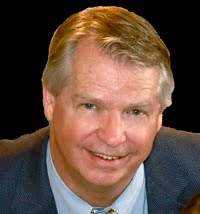
SCWMF meeting attendees (left to right): Dr. Kay Martin, Chip Clements, Coby Skye, Rick Brandes, Tobie Mitchell, and Jim Stewart (11/2009 by Scott Miller)

Last November the Southern California Waste Management Forum (SCWMF) met at its 38th annual meeting to discuss future directions for municipal solid waste management in the region. 2010 is an important year because time is running out before the 2013 closure of Southern California's largest landfill (Puente Hills). This is also the year that AB 222 will be reviewed by the Environmental Quality Committee before proceeding onto the California Senate floor for a vote. Without passage of AB 222 local municipalities will have fewer options for deploying regional solutions to the state's strict recycling and landfill diversion mandates.

Speaking eloquently on this occasion about the dichotomy of competing camps and the need for collaborative and regional decision-making was William ("Rick") Brandes from the U.S. EPA in Washington, DC. Rick has recently retired from his position as Chief of the Energy Recovery and Waste Disposal Branch, Office of Resource Conservation and Recovery.

His presentation was titled "EPA and Energy Recovery from Wastes." He talked about the polarized stances that have formed over the energy recovery issue and the need for the two camps to come together. He pointed out that increasing climate change concerns have forced analysis of comprehensive mitigation strategies for which energy recovery is evolving as a major player. "Increased recycling and energy recovery provide significant greenhouse gas emissions savings," he asserted.

He pointed out that in Europe population density and lack of open land has convinced policymakers of the need to enable utilities to deploy energy recovery and centralized heating and power (CHP) systems. The emphasis there is on substituting waste-to-energy facilities for landfills. These facilities are situated within the communities they serve without toxic impacts on surrounding populations. In fact, as his graphic shows below, the countries with the most comprehensive recycling programs are also the ones that use incineration the most.

This logic seems to be an affront to some recycling and "zero waste" proponents who argue against energy recovery using thermochemical means no matter what the emissions profile is.

In this month's MSW Management magazine, Rick Brandes admonishes those who refuse to recognize that solutions are regional and require cooperative effort to achieve. Below are some excerpts from this article.

--------------------------------
March-April 2010
Cooperation, Not Conflict: Municipal Solid Waste Management in the 21st Century

By Rick Brandes

Having recently retired after 31 years working on waste management regulations and policy at the US Environmental Protection Agency, I’d like to voice a massive frustration on the state of municipal solid waste management policy in this country.

In one camp are the “zero wasters.” They see a world where real integrated materials management means all materials are contained in a continuous use/reuse cycle: organics to composting and soil enhancement, recyclables returned to use either in closed or open loop recycling systems, metals and glass back to new metals and new glass, and paper back into paper. They see the public as ready for a massive change to a more sustainable lifestyle, trashwise. And, incineration is viewed as the enemy of zero waste, not a complement.

In the other camp are the “energy recoverers.” They see a practical, realistic world, where real integrated materials management is driven by market forces, where recycling occurs when it makes market sense and energy is recovered from the bulk of the remainder of the non-recyclable municipal wastestream through mass-burn incineration or advanced thermochemical conversion. They see it as a decision on whether to landfill or recover energy, not whether to incinerate or recycle. They see the public as most likely to do what they are currently doing—and that doesn’t include a big change in lifestyle, trashwise.

It’s not like there are no alternative strategies. There are many, many ways to beneficially use this trash mountain of ours. Augment soil. Generate power. Make paper and save trees. Reduce bauxite mining. Recover even more metal out of the ash. Make park benches and roads. Produce ethanol and biodiesel. Use all alternatives where they make sense. Use different waste management strategies in different places. Do more of some of these things in some places and less of them in other places. But don’t editorially gun people down when they don’t do what you think they should do. Give communities the best available information, and they will probably do what is best for them. Let them make their trash more valuable.

About the only thing we can say right now is that there exists a massive lack of consensus on what constitutes an effective integrated materials management strategy. That has to change.

For the complete article, click here

I will be speaking about this and sustainable supplies of rural biomass during the Opening Session of the Waste-to-Fuels Conference in Jacksonville, FL April 18-20.

----------------

technorati , , , , , , , ,

July 19, 2009

California's price for a failure to launch


Chalk one up for the fossil energy status quo.

Last Thursday, as a result of obstructive votes of five members of the California Senate Environmental Quality Committee (SEQ), a crucial piece of renewable energy legislation titled "Assembly Bill 222" has been delayed yet another year. Call it a failure to launch.

If approved, this legislation would have responsibly (and with articulated recycling and environmental safeguards) given statewide municipalities and utilities the necessary authority to deploy new technologies (in particular, gasification and pyrolysis) to meet and even exceed statewide landfill diversion mandates by converting municipal solid waste into biofuels and biopower.

Versions of this bill have been working their way through Sacramento since early 2005. This "band of five" (all SEQ Committee Democrats) voted to delay action:

• Despite the expressed support of nearly 80 organizations in favor AB 222 (vs. 19 against), which was unanimously approved by the Assembly Utilities and Commerce Committee in April, and which passed the heavily Democratic California State Assembly by a vote of 54-13.

• Despite approval of the bill by the California Senate Utilities, Energy and Communications Committee on July 7th.

• Despite national bipartisan initiatives to develop alternative fuels and renewable power - namely EISA, the Farm Bill, the cap and trade bill, the preponderance of state Renewable Energy Standards.

• Despite the President spurring governmental agencies to stimulate the economy by quickly approving development and deployment of renewable technologies with investment and policy incentives.

• Despite California's precedent-setting Global Warming Solutions Act (AB 32), its aggressive Renewable Portfolio Standard, and its ground-breaking Low Carbon Fuel Standard designed to provide cleaner alternatives to fossil fuels and power.

• Despite Governor Schwarzenegger and the California Energy Commission supporting the legislation as a necessary component of his Bioenergy Action Plan.

• Despite a national and California state financial crisis that is the worst since the Great Depression. This legislation would have created jobs and drawn significant private industry investment to the state.

Had the SEQ Committee not interfered the measure was certain to pass the Senate with balanced bipartisan support.

California has a long history of facing crisis after crisis with intelligence, industry, investment, and heroic engineering. It has built paradigm changing technologies in defense, nuclear energy, water and waste management, educational systems, entertainment, environmental practices, computers, and communications that have not only funded the state's phenomenal growth and global influence, but also changed the world.

Not anymore if, as in this case, a few politicians can continue to derail progress when we need it most. Progress to introduce renewable alternatives before our valuable resources run dry. Progress to reduce fossil emissions that threaten public health and global climate change.

Waiting for perfection

What are they waiting for? In a word - "perfection." Opponents to AB 222 are holding out for zero waste and zero emissions.

Zero waste is a universal ideal that we all can agree on whether its energy, natural resources, human capital, efficiency, infrastructure, or funds that is being wasted. The question is not what is the perfect solution, rather how do we improve on the status quo? Inertia is the enemy of progress - it's a form of waste - wasting time.

You can't improve on the status quo by waiting for the perfect answer. We need to support those who spearhead new improvements that build toward better solutions.

That's why Washington is abuzz with the phrase "Perfection is the enemy of the good."

Zero emissions is another example of an ideal that is unachievable without taking progressive steps toward a solution. That's because emissions have many direct and indirect sources. The indirect land use issue is a controversial example of the interconnectedness between sources, processes, and emissions. California's Low Carbon Fuel Standard - and, until recently, the proposed federal cap and trade bill - would handicap certain biofuels for their anticipated direct and indirect impact on worldwide fossil carbon emissions. This is a classic Catch-22.

While we all agree that fossil fuels and fertilizers need renewable replacement, it is unfair to base comparisons of alternatives on their current dependence on fossil fuels for production. Fossil emissions are emitting during production of renewable fuels and power because there are currently no alternatives. We won't have alternatives until we create them. Once we have them we can use biodiesel to replace diesel, and ethanol to replace gasoline, and wood pellets to replace natural gas, etc. But we need to "launch" new alternatives first - and as any Floridians can attest, escaping earth's gravity (launching) takes a significant amount of fossil energy - because that is all we have.

The space shuttle is not perfect. But it is a great example of a technology that resulted from progress through many "good" steps - from Kitty Hawk to Cape Canaveral. And created many byproduct technologies that we cherish today.

Policy-makers need to enable private enterprise ventures to research, develop, and deploy good solutions - not hamper them. Their deployments will still have to conform to economic, environmental, and social sustainability standards.

Enabling legislation is a cheap way for governments to lure investors to take on the financial risk of emerging technologies. Policy delay increases risk and, hence, reduces investment which slows the rate of change and the potential return on investment.

California has failed to launch. Let's hope that other states pick up the gauntlet and lead.

----------------
technorati , , , , ,

June 12, 2009

California's showdown over waste feedstocks


A showdown is looming in the California State Senate this summer over an issue that is at the heart of the nationwide drive to develop and deploy bioenergy conversion technologies.

In a state that prides itself on its landmark achievements in outlining Global Warming Solutions (AB 32), Bioenergy Action plans, and Low Carbon Fuel Standards, access to some of the most sustainable feedstocks for conversion to bioenergy is currently blocked by inexact statutory language and permitting regulations. As a result, municipalities and utilities are frustrated in their ability to exercise local authority over how they meet stringent waste diversion goals to reduce reliance on landfills for dumping post-recycled waste.

Post-recycled municipal solid waste is considered to be the most sustainable feedstock for biomass conversion into biofuels and biopower because, unconverted, this waste emits greenhouse gases while it decomposes. It is the only feedstock that has "negative" cost - receiving facilities receive per ton "tipping fees" that vary from region to region. Socially, it could provide good urban jobs that cannot be off-shored.

At the rate that municipal landfills are filling up and closing down, there is no time to wait. The state's largest landfill in Puente Hills, which services Los Angeles County, is scheduled to close in 2013. MSW currently disposed of there will instead be sent by train to a landfill 200 miles away!

Legendary former California State Senator (President Pro Tem) David Roberti and his Bioenergy Producers Association (BPA) is working overtime this month lining up support for passage of the bipartisan California Assembly Bill 222. With over 60 organizations supporting it (including municipalities, utilities, labor organizations, waste disposal facilities, and others) the bill was unanimously approved by the Assembly Utilities and Commerce Committee on April 27, 2009, and passed the State Assembly by a vote o 54-13 on Monday, June 1st. The Senate is expected to be a much more challenging battleground where, without support, the act might not get out of committee.

AB 222 proposes to update the Integrated Waste Management Act of 1989. It is one of those seemingly innocuous pieces of legislation that only a policy wonk could love, but it is extremely important because without its passage municipalities will continue to find it virtually impossible to permit and fund deployment of municipal solid waste conversion technologies around the state. In a Catch-22 they are penalized for not deploying solutions that achieve minimum state diversion targets..

If passed, deployment of such facilities could divert approximately 30 million tons of post-recyclables from landfills while producing biopower and biofuels in accord with state (AB 32) and national initiatives (EISA, the Farm Bill, and pending Waxman/Markey cap and trade bill) to reduce greenhouse gas emissions.

The strongest opposition to the legislation is being coordinated by Californians Against Waste (CAW). They see the bill as a threat to their sizable influence over waste streams in California. The BPA acknowledges the contributions that CAW has made to reducing, reusing, and recycling MSW in the state but dispute the contention that this measure will set recycling back. Instead, they emphatically assert it will help expand recycling in the state.

To point out other discrepancies, BPA is currently distributing a document titled CAW Misrepresents Renewable Energy Bill (AB 222) throughout Sacramento itemizing CAW's objections ("myths") and countering them with the facts at the foundation of AB 222 as written. The document charges that "Californians Against Waste has repeatedly attempted to discredit or thwart legislative and regulatory initiatives that would make possible the production of advanced biofuels and green power from these resources."

At a common sense level, if society can't even agree that post-recyclables are qualified feedstock for conversion to alternative forms of energy then the likelihood of other feedstocks being qualified is virtually nil. It is time for legislators to put more authority back in the hands of municipal governments to meet their diversion goals and to determine what is and what is not safe and sustainable. Public and private industries will always have to meet stringent standards on emissions and pollution for any solutions they deploy.

----------------
technorati , , , , , , ,

April 21, 2009

California reform needed to spur investment in conversion technologies

Californians interested in supporting the clean conversion of post-recyclable waste streams into biopower and biofuels need to help support regulatory reform in Sacramento right now.

California is the crucible for this issue because of its proud history for diverting municipal solid waste (MSW) from landfills through reduction, reuse, and recycling. However there still remains some 40 million tons of post-recycled waste that fails diversion and ends up in a landfill. Why? Because the only conversion technology municipalities are allowed to receive diversion credit for is composting. However, there isn't sufficient market for compost (imagine saying that about affordable biopower or biofuels!). Excess compost gets spread onto landfills as alternate daily cover - so there is no true diversion.

A policy I advocate on this blog would allow municipalities to help meet their diversion requirements using their post-recycled waste as feedstock processed by new clean conversion technologies to create thousands of megawatts of green power and millions of gallons of biofuels.

It is incredible that, in a carbon sensitive world, there would be any opposition to such a sensible, regulated policy - but there is. That's why it is critical that new legislation, AB 222, which came out of the Assembly Rules Committee this past week, receive documented public support when the Utilities & Commerce Committee considers it at a scheduled hearing on April 27th. Late letters can still be important for when the fill ultimately reaches the Senate for a vote.

AB 222 will allow low emission thermal conversion technologies to make biofuels and bioenergy out of this waste. Antiquated regulatory definitions virtually prohibit the deployment of even demonstration size facilities for providing proof of concept and required emissions verification. Without the legislative reforms contained in AB 222, no state municipalities dare build conversion technologies to meet diversion requirements.

Below is an appeal for your written support to enable this legislation to reach the Assembly and then the Senate floor for a vote. Please follow the instructions for submitting a letter of support and fax it in today.

---------------
Letter from the Bioenergy Producers Association
From Chairman of the Board Jim Stewart

The BioEnergy Producers Association is pursuing legislation to expedite the permitting and implementation of conversion technologies for the production of renewable energy from the state's organic waste streams.

The legislation creates a new category in statute for a "biorefinery," which is broadly defined as a facility that uses "non-combustion thermal, chemical, biological and/or mechanical processes to produce renewable fuels, chemicals and electricity from any carbonaceous materials.

It will remove from statute a scientifically inaccurate definition of "gasification," which requires zero oxygen in the process and zero emissions from the entire facility, a standard required of no other manufacturing process in the state.

The bill, AB 222, has been moving forward very quickly. It came out of the Assembly Rules Committee this past week and was referred to the Utilities & Commerce Committee, which has scheduled a hearing on April 27th.

Its co-authors, Fiona Ma and Anthony Adams have asked for letters of support, and these letters need to be faxed to the Utilities & Commerce Committee before 5:00 p.m. on Tuesday, April 21st in order to be acknowledged and listed on the Committee's staff report.

We would be pleased if you could submit such a letter. It should be addressed to Assembly Member Felipe Fuentes, Chair, Utilities and Commerce Committe and faxed to Edward Randolph (the Committee staff member who is preparing the analysis of the bill). The fax number is (916) 319-3899. I am attaching a copy of AB 222 and a bill summary, should you need it for reference. We have a comprehensive web site which you may find of interest, www.bioenergyproducers.org.

Many thanks.
Jim Stewart
Bioenergy Producers Association
Chairman of the Board
323-650-5095

----------------------------
Passage of the bill will:
• Expand the beneficial use of California’s waste streams, and in so doing, stimulate economic investment and provide high level green collar manufacturing jobs here at home, rather than exporting materials to the Far East, India and Nigeria, where essentially no environmental standards exist.

• Significantly reduce the life-cycle greenhouse gas emissions of biofuels and assist the State in reaching its AB 32 GHG reduction goals;

• Reduce statewide dependence on landfills and their associated methane production and waste transport costs;

• Provide alternatives to the open-field burning of agricultural residues and the agricultural land-spreading of biosolids;

• Promote energy independence and national security by enabling the in-state production of advanced biofuels, rather than importing petroleum from the Middle East or ethanol from the Midwest (one billion gallons in 2008);

• Reduce by up to 90% CO2 emissions from automobiles as compared to an energy-equivalent amount of gasoline,

• Help California achieve the goals of its Renewable Portfolio Standard, Low Carbon Fuel Standard and Bioenergy Action Plan.

----------------
technorati , , , , , ,

March 1, 2009

Sierra Club and Worldwatch: Gasification is a "Smart Choice" for Biofuels

In February of this year the Worldwatch Institute and Sierra Club jointly released a report that supports the continued development of cellulosic biofuels using thermochemical means. From the report...
“In the thermochemical platform, heat, pressure, chemical catalysts, and water are used to break down biomass in much the same way that petroleum is refined. Thermochemical technologies include gasification, fast pyrolysis, and hydrothermic processing. These technologies can be used to convert almost any kind of biomass into fuel, from grass to turkey feathers, giving them a potential advantage over biochemical technologies that rely on developing specific enzymes to break down specific plant matter."

Smart Choices for Biofuels maps a future path for biofuels to ensure that they are more environmentally and socially sustainable and that the use of renewable fuels for transportation contributes to the global effort to reduce global warming pollution. The steps proposed in the report include an accelerated transition to cellulosic feedstocks such as switchgrass and the use of more effective agricultural practices to decrease erosion and soil nutrient depletion. Further, the report specifically identifies advanced biofuels feedstocks as including “the organic material found in urban waste."

Here are several other excerpts from the report:
"Despite ambitious government mandates and strong financial support for the biofuels industry, so-called “first-generation” biofuels have raised a variety of economic, social, and environmental concerns. New information points to the urgent need for a major shift to more-advanced biofuels to prevent negative effects on the climate, land, soil, water, air, and rural economies."

"Nearly all studies on the role of biofuels in mitigating global warming and boosting energy security have concluded that “second-generation” (or “advanced”) biofuels, which rely on non-food feedstocks and offer dramatically improved energy and greenhouse gas profiles, are necessary to make wider use of biofuels feasible worldwide."

"Cellulosic and other advanced biofuels have a better fossil energy balance than do first-generation biofuels; that is, the amount of fossil energy required to make the fuel is much lower relative to the amount of energy gained in return, which can significantly lower lifecycle greenhouse gas emissions."

One of the report's major policy recommendations is to:
“Re-examine the renewable energy portfolio balance to bring on cellulosic and other advanced biofuels faster and to promote biomass use for electricity generation and heat."

----------------
technorati , , , ,

November 9, 2008

Green Collar Workers for the Renewable Energy Economy


Perhaps the most overlooked issue for all sectors of the renewable energy paradigm is the availability of trained manpower. Maybe it should be the prime issue rather than a secondary one. It certainly will be once new technologies have emerged because widespread implementation and deployment will depend on the availability of a generation of new laborers for work that cannot be off-shored.

A leading advocate for the building this green collar workforce now is Van Jones, a legal scholar and an Oakland, California activist who has just received notification that his new book, The Green Collar Economy, has been listed on the NY Times Bestseller list. Any author would be thrilled but you get the feeling that it means more to him than better market exposure for the book. The book is, afterall, a means to an end. It is the cause that matters and Jones is nothing if not passionate about the cause.

What is the cause? The subtitle of the book is "How One Solution Can Solve Our Two Biggest Problems." The two problems are the fossil based economy and its impact on the economy. The "one solution" proffered by this book is the creation of new, meaningful green collar careers for the underemployed and often unskilled urban and rural workforce in America and other parts of the world.

Clearly, with a new administration headed to Washington (coupled with a clear Democratic majority in both houses) social policymaking and budget allocation is going to change. Add to that the threat of global economic collapse and the question isn't is the government going to address the needs of the middle class - it is how is it going to do it? Surely, this administration will attempt to get more Americans back to work.

Public works programs like the Civilian Conservation Corps (CCC), not seen since the days of FDR, are already being forecast above the fold in major newspapers. The likely projects will involve not only energy production, but also energy efficiency and transportation infrastructure. That is good because new bioenergy projects in particular will be dependent on increased traffic of heavy vehicles on good roads.

This is what is making Van Jones' book so timely. He addresses the economic justice issue by advocating a new spirit of survival collaboration (Noah and the Ark) in place of counterproductive confrontation (David vs. Goliath). He presents numerous case studies that document different ways that community-based organizations are changing their landscape, employment picture, and can-do self image.

In the back of the book is a list of online resources for learning more and getting involved. Some of my favorites are ACORE, the Apollo Alliance, the Los Angeles Coservation Corps, Andy Lipkis' Tree People, and Majora Carter's inspirational Sustainable South Bronx.

Perhaps the most obvious choice for getting involved is the Green For All website - a sophisticated online resource for engaging stakeholders, advocating policy, and expanding public awareness of the need and potential for "Green Jobs Now!" It too is a means to an end, leveraging the power of the internet to coordinate events as well as defining the scope of the campaign.

What I see missing in the book is a comparable campaign for rural America. The forests, farms, and rangelands of the countryside will provide a host of opportunities for growth of meaningful green collar jobs. Who will run the new equipment, build and operate green power plants and biorefineries for an increasingly decentralized renewable energy paradigm? Unless we stop the leaching of jobs from our depressed rural cooperatives and enterprises, much of the existing infrastructure will need to be refinanced and rebuilt and new manpower trained to deploy regional solutions. These are issues that are part of the agenda of 25x'25 and many national industry associations.

----------------
technorati , , , , ,

November 2, 2008

The Greening of American Business

Joel Makower comments on the opportunities and challenges presented by the green economy

For twenty years Joel Makower has been a prolific and insightful communicator about businesses and their role in developing environmentally sustainable practices. He has his own website and Two Steps Forward blog. Many recognize him for his frequent speaking engagements at Clean-tech, business, academic, and investment conferences throughout the country. In short, he is a multi-media "bridge-builder" - as high a compliment as I am accustomed to making.
Joel is co-founder and executive editor of Greener World Media, Inc., which produces GreenBiz.com and its sister sites, ClimateBiz.com, GreenerBuildings.com, and GreenerComputing.com. He also serves as a senior strategist at GreenOrder, a sustainability consultancy, as well as co-founder and principal of Clean Edge Inc., a research and publishing firm focusing on building markets for clean energy technologies.

Joel Makower is also the author of more than a dozen books, including his latest titled "Strategies for the Green Economy: Opportunities and Challenges in the New World of Business" which I found to be a very illuminating snapshot of the operational successes and marketing shortcomings of environmentally conscious American businesses in today's economy. Joel offers a constructive discourse on the way many businesses assess the challenges and address the opportunities of "going green."

To be sure, many business marketing campaigns, in a vain attempt to appear green, are "all hat and no cattle" - calling themselves green for marketing purposes without any substantial impact on their environmental footprint. But Joel is fair in assessing which are making sincere attempts and he cites many examples that help define and illustrate what truly contributing to environmental sustainability is all about.

One of my favorite chapters is titled "You Gotta have CRED" - an acronym for Credibility | Relevance | Effective Messaging | Differentiation. Created by GreenOrder, a business strategy firm that he is affiliated with, CRED is the framework for crafting green strategies and messaging that work. He explains what and how necessary each element is and then simply concludes "Bottom line: You can start anywhere. The important thing is to cover all the bases."


Another chapter with particular relevance to my BIOwaste and BIOstock Blogs is titled "A Tale of Two Circles" which has pie charts I hadn't seen paired before (see my rendition above). It not only shows the total (.2 billion tons per year) and breakdown of municipal solid waste in the U.S. but also shows it to be a minor component of total trash in the country that comes from industrial waste.

In a recent post on his blog, Waste is a Profitable Thing to Mind he summarizes the import of the graphic:
The annual 13 billion tons of Gross National Trash is a costly burden on the environment, not to mention the companies that create these wastes and have to responsibly dispose of them. And it represents a vast untapped business opportunity for Waste Management and the world's other haulers and recyclers to find new ways to create value from these waste streams, or to eliminate them in the first place.

One of the true benefits of the new push for bioenergy would be the development of technologies that can efficiently clean up and tap the energy contained in the organic content of these waste streams.

Another important question that he addresses in the book is "Is green business a fad or a trend?" He then gives ten reasons why he thinks it is an enduring issue for businesses for years to come. Among them are: 1 - The problems aren't getting any better, 2 - The environment has become a fiduciary issue, 3 - Companies are moving beyond "sustainability" and 4 - There's money to be made.

Read the book to learn about these topics and others relevant to issues covered in the BIOenergy BlogRing.

You can hear Joel Makower interviewed for a NewPage OnPaper podcast recorded October 1st at the SustainCommWorld Live after his keynote speech.

----------------
technorati , , , , , ,